How to Make Over Easy Eggs (Perfect Runny Yolk Every Time)
Cooking over easy eggs looks simple, but many people struggle with it. The yolk breaks while flipping, or it cooks too much and loses its runny texture. Even small mistakes can ruin the result.
Over easy eggs need careful timing and a gentle flip. However, once you understand the right moment to flip and how heat affects the egg, it becomes much easier to get consistent results. In this guide, you will learn what over easy eggs are, how they should look, and how to cook them step by step.
Quick Answer: What Are Over Easy Eggs?
Over easy eggs are fried eggs cooked on both sides. The whites are fully set, and the yolk stays runny inside.
This means the yolk is liquid and flows easily when cut. This is what makes over easy eggs different from other fried egg styles.
What Does “Over Easy Eggs” Mean?
The word “over” means the egg is flipped during cooking.
The word “easy” means the yolk is only lightly cooked. It stays soft and runny inside.
This means the egg is cooked just enough to set the whites while keeping the yolk liquid. In simple terms, the egg is flipped once but the yolk remains runny.
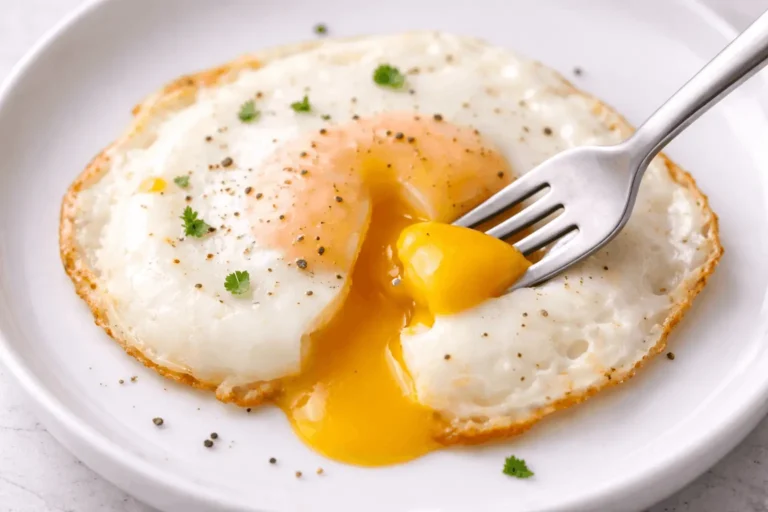
What Do Over Easy Eggs Look Like? (Runny Yolk Guide)
Over easy eggs have fully cooked whites with no clear parts.
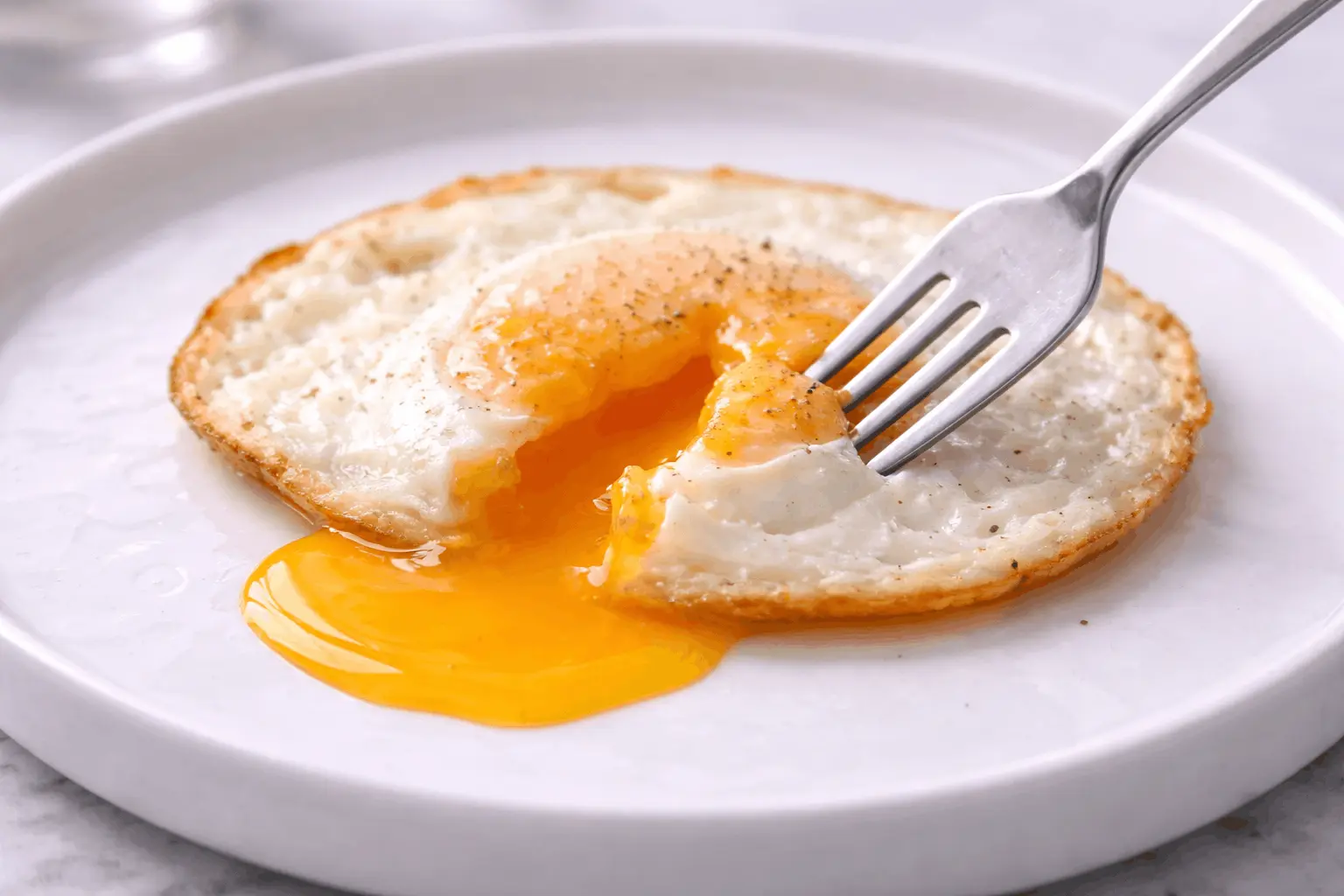
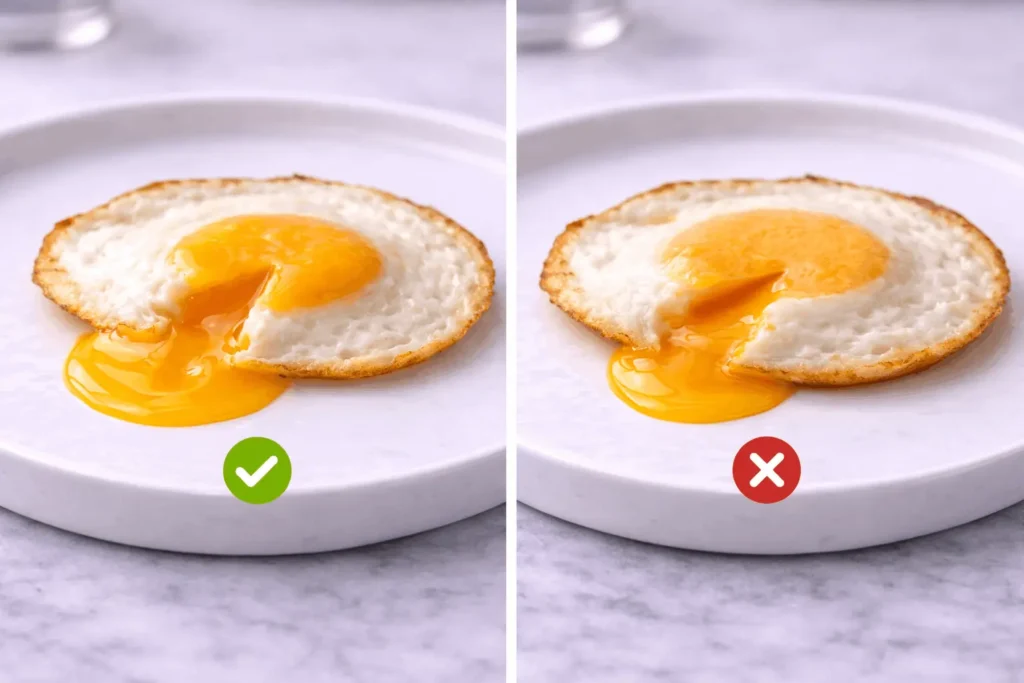
The yolk looks soft and glossy. When you cut it, the yolk flows out like liquid.
This is the key sign of a perfect over easy egg.
If the yolk spreads quickly, it is correct. If it stays thick or firm, it is overcooked.
If the yolk feels slightly thick instead of flowing, it means the egg has moved closer to over medium.
Runny Yolk Guide
| Yolk Texture | What It Looks Like | Result |
|---|---|---|
| Very runny | Spreads quickly like liquid | Perfect over easy |
| Slightly thick | Moves slowly | Slightly overcooked |
| Firm | Does not move | Over medium or over hard |
Types of Fried Eggs (Sunny Side Up, Over Easy, Over Medium, Over Hard)
There are four main types of fried eggs:
- Sunny side up – cooked on one side, yolk fully runny
- Over easy – flipped, yolk runny
- Over medium – flipped, yolk soft and slightly thick
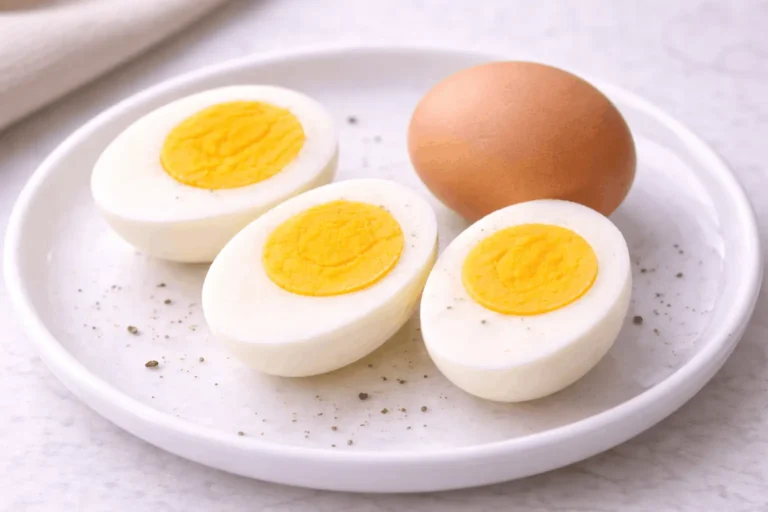
- Over hard – flipped, yolk fully cooked
Each type depends on cooking time and flipping. Small changes in time can change the yolk texture.
Over Easy vs Sunny Side Up vs Over Medium
| Style | Flip | Egg White | Yolk |
|---|---|---|---|
| Sunny side up | No | Set on bottom | Fully runny |
| Over easy | Yes | Fully set | Runny |
| Over medium | Yes | Fully set | Soft, slightly thick |
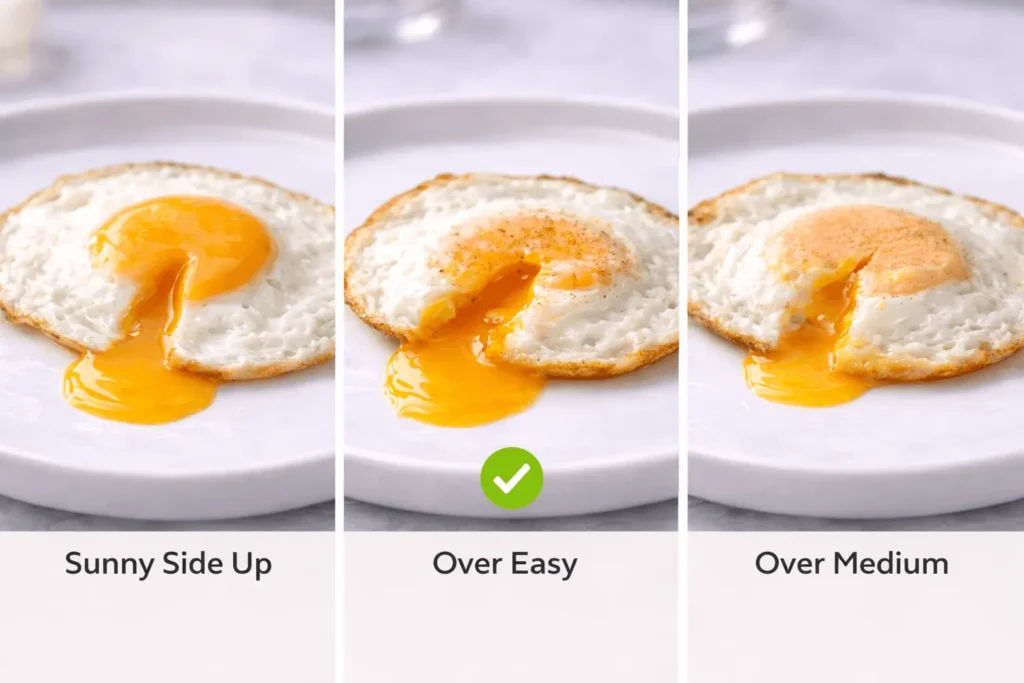
Over easy eggs are different because they are flipped but still have a runny yolk. This makes them softer than over medium eggs but more cooked than sunny side up.
How to Make Over Easy Eggs (Step-by-Step)
Follow these steps to cook over easy eggs correctly.
Heat the pan
Place a non-stick frying pan on medium-low heat. Let it warm for 1–2 minutes. A steady heat helps cook the egg evenly.
Add butter or oil
Add a small amount of butter or oil. Let it melt and coat the pan. This prevents sticking and helps the egg cook smoothly.
Crack the egg
Crack the egg gently into the pan. Keep the yolk whole. If the egg spreads too much, the pan may not be hot enough.
Cook the first side
Cook for about 2–3 minutes. The whites should turn solid and fully set.
Flip at the right time
Flip the egg gently once the whites are set. Use a thin spatula and a smooth motion. If the whites are not fully set, wait a little longer before flipping.
Finish cooking
Cook for 20–40 seconds after flipping. This short time keeps the yolk runny while lightly cooking the top.
What Makes Perfect Over Easy Eggs?
A perfect over easy egg has fully set whites and a yolk that flows easily when cut. The yolk should not be thick or firm.
The goal is to cook the egg just enough without overcooking the yolk. If the yolk does not flow, it means the egg has been cooked too long.
Quick Cooking Cheat Sheet
| Step | What to Do | Time |
|---|---|---|
| Heat pan | Medium-low heat | 1–2 min |
| First side | Cook until whites set | 2–3 min |
| Flip | Gently flip egg | — |
| Second side | Cook briefly | 20–40 sec |
Do You Flip Over Easy Eggs?
Yes, over easy eggs must be flipped.
If you do not flip the egg, it becomes sunny side up instead.
Flipping cooks the top lightly while keeping the yolk runny. This step is necessary to get the correct texture.
When to Flip Over Easy Eggs (Most Important Step)
Timing is very important.
Flip the egg when:
- the whites are fully set
- the edges look firm
- the yolk still jiggles slightly
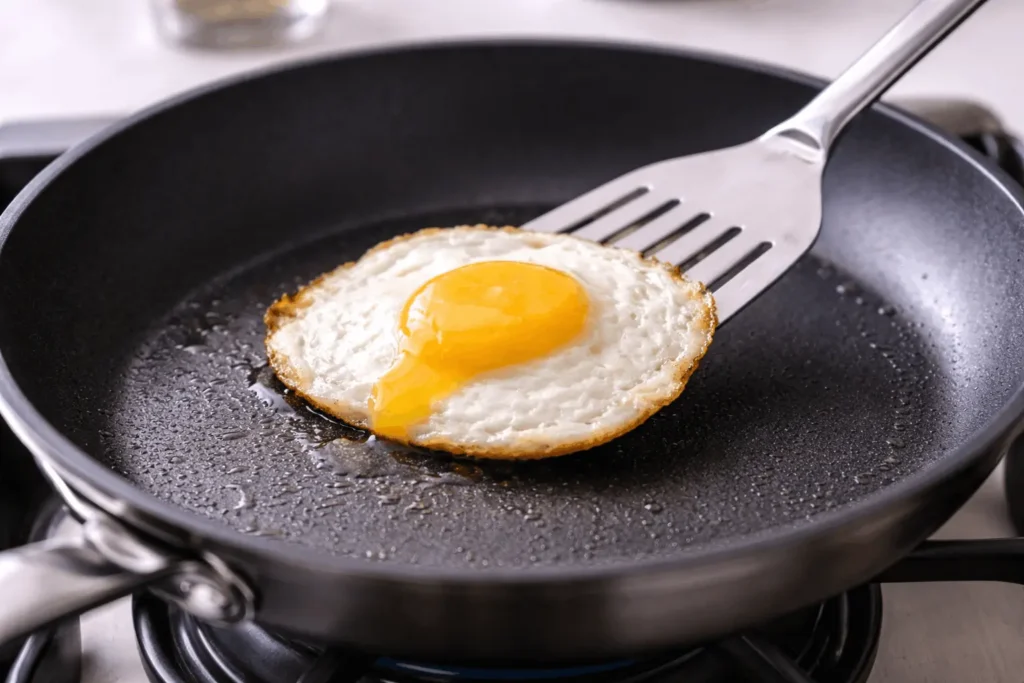
If you flip too early, the yolk may break.
If you flip too late, the yolk may cook too much.
If you are unsure, wait a few more seconds until the whites are fully stable before flipping.
How Long to Cook Over Easy Eggs (Time and Heat Guide)
- First side: 2–3 minutes
- Second side: 20–40 seconds
Use medium-low heat.
High heat cooks the egg too fast and can make the yolk firm.
Low heat helps control the cooking and keeps the yolk runny.
If the yolk is too runny, cook it 10–20 seconds longer. If it becomes too firm, reduce the cooking time next time.
How to Keep the Yolk Runny Without Breaking It
To keep the yolk runny:
- Use medium-low heat
- Flip gently with a spatula
- Do not press the egg
- Cook the second side for a short time
If the yolk breaks, the egg can still be eaten, but it will not have the same texture.
If the egg cooks unevenly, reduce heat slightly and cook more slowly.
How to Know When Over Easy Eggs Are Done
Look for these signs:
- whites are fully set
- yolk is soft and moves slightly
- no raw egg white is visible
When cut, the yolk should flow easily. This is the best way to confirm it is done correctly.
Common Mistakes When Cooking Over Easy Eggs (And Fixes)
Yolk breaks
Flip too early or too fast. Wait until whites are set.
Egg too runny
Cook the second side for 10–20 seconds more.
Egg too firm
Reduce cooking time after flipping.
Egg sticks to the pan
Use enough oil and heat the pan properly.
Egg spreads too much
The pan is not hot enough. Let it heat longer before adding the egg.
Quick Fix Guide
- Yolk breaks → flip later and more gently
- Egg too runny → cook 10–20 seconds more
- Egg too firm → reduce cooking time
- Egg sticks → add oil and heat pan properly
Factors That Affect Over Easy Eggs (Pan, Heat, Egg Size)
Pan type
Non-stick pans work best for beginners.
Heat level
Medium-low heat gives better control. High heat cooks the yolk too quickly.
Egg size
Larger eggs take slightly longer to cook.
Egg temperature
Room temperature eggs cook more evenly than cold eggs.
These factors can change your results even if you follow the same steps.
Are Over Easy Eggs Safe to Eat? (Including Pregnancy)
Over easy eggs have a runny yolk. For most healthy people, they are safe.
However, some groups should be careful, such as:
- pregnant women
- older adults
- people with weak immune systems
Food safety guidelines often suggest fully cooked eggs for these groups because undercooked eggs may carry risk.
Are Over Easy Eggs Healthy? (Nutrition and Calories)
One large egg contains:
- about 70 calories
- around 6 grams of protein
- healthy fats
Two over easy eggs have about 140 calories, depending on added oil or butter.
Eggs are a good source of protein and nutrients when eaten in balance.
FAQs About Over Easy Eggs
Are over easy eggs runny?
Yes. The yolk is runny and flows when cut.
How long should I cook over easy eggs?
Cook 2–3 minutes on one side and 20–40 seconds after flipping.
Do you always flip over easy eggs?
Yes. Flipping is required to cook both sides.
Can pregnant women eat over easy eggs?
It is safer to eat fully cooked eggs during pregnancy.
Conclusion
Over easy eggs are all about timing and control. The whites need to cook fully while the yolk stays runny and soft. Small changes in heat and cooking time can affect the final result.
Once you understand when to flip and how long to cook, making over easy eggs becomes simple. With practice, you can get a perfect runny yolk every time without breaking it.