How to Separate Egg Whites and Egg Yolks (5 Easy Methods)
Separating egg whites or egg yolks seems simple, but it can quickly become frustrating in the kitchen. Many home cooks break the yolk on the first try, and even a small amount of yolk mixed into the whites can cause problems in recipes like meringue, macarons, or angel food cake. This often happens when someone is following a recipe and suddenly sees the instruction “separate the eggs” without knowing the best method.
The good news is that separating egg whites is a simple kitchen skill once you know the right technique. Professional cooks and bakers use a few reliable methods that keep the yolk intact and the whites clean. In this guide, you will learn several easy ways to separate egg whites, along with practical tips that help prevent broken yolks and messy mistakes.
Key Takeaways
- The easiest way to separate egg whites is by lifting the yolk with your hands.
- Cold eggs separate more easily because the yolk stays firm.
- Even a small amount of yolk can stop egg whites from whipping properly.
- Using a small bowl first prevents mistakes when separating several eggs.
- Clean bowls without grease are important when working with egg whites.
Quick Answer: How to Separate Egg Whites
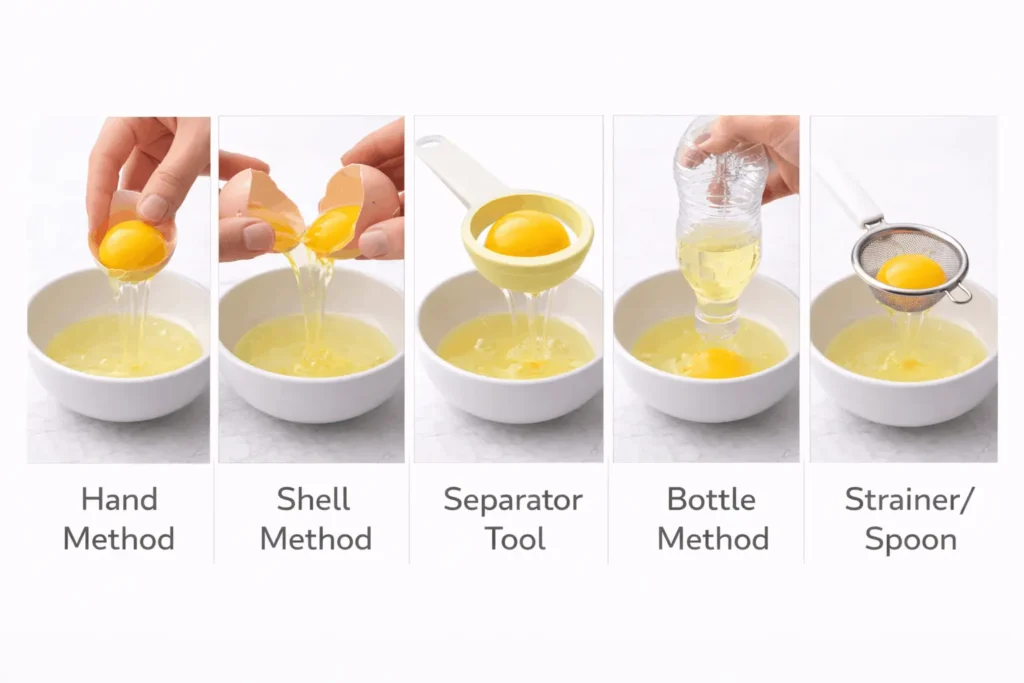
The easiest way to separate egg whites is to crack the egg into a bowl and lift the yolk out with your hands. The egg white will slip through your fingers while the yolk stays in your hand.
This quick technique is helpful when you are in the middle of cooking or baking and need a fast answer.
Other common methods include:
- using the egg shell halves
- using an egg separator tool
- using a plastic bottle
- using a strainer or spoon
Most cooks prefer separating eggs while they are cold, because the yolk is firmer and less likely to break.
Why Some Recipes Require Separating Eggs
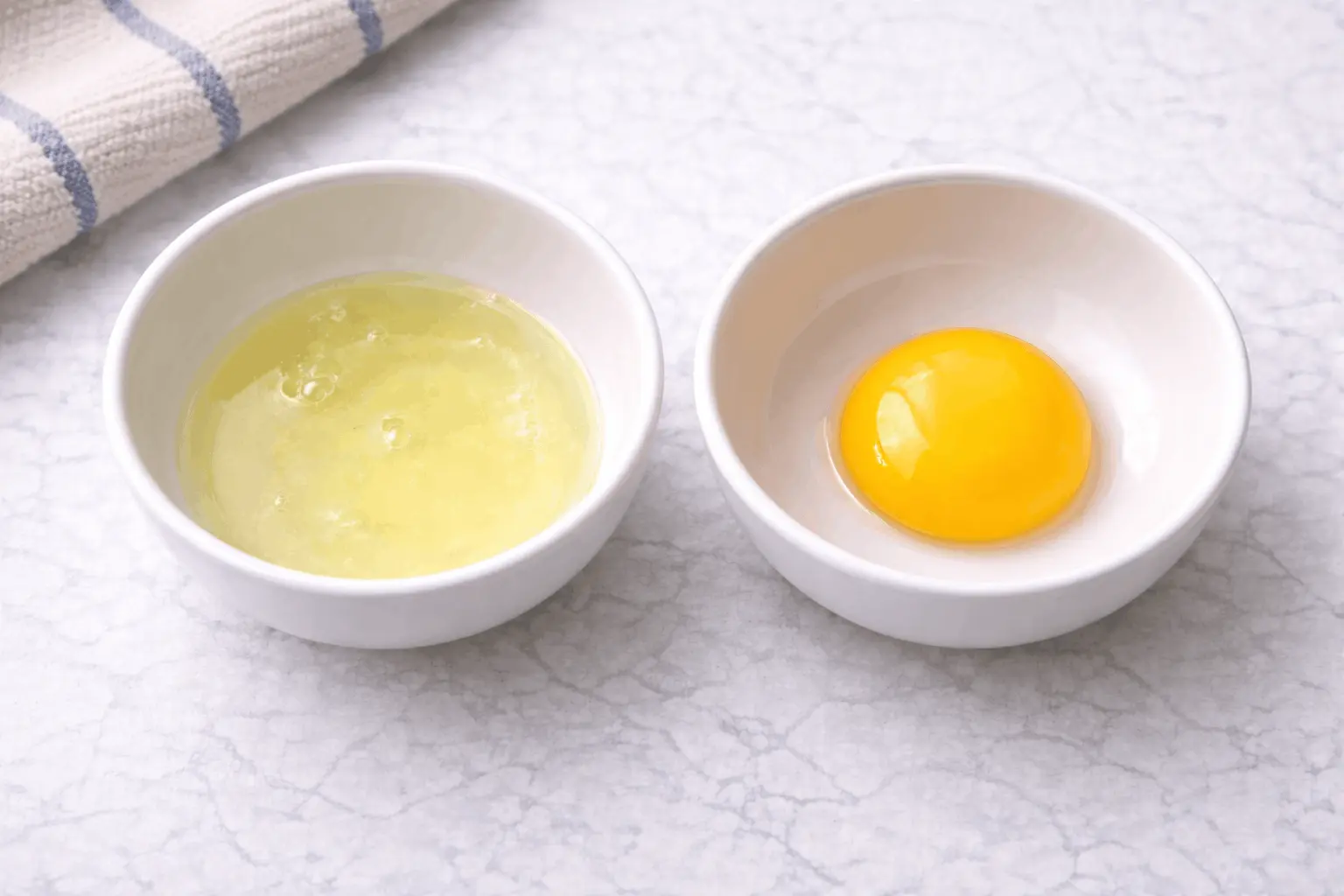
Egg whites and egg yolks behave differently in cooking. Each part helps recipes in a different way.
Egg whites contain proteins that create foam when whipped. These proteins unfold and trap air bubbles, which forms a stable foam structure.
Egg whites are also known as albumen, the clear liquid part of the egg.
Egg yolks contain fat and richness. They help create smooth sauces and creamy desserts.
Understanding this difference helps beginner cooks feel more confident when following baking recipes.
Recipes That Use Egg Whites
Many baked goods use egg whites for structure and lift.
Common examples include:
- meringue
- angel food cake
- soufflé
- macarons
These recipes rely on whipped egg whites to create air and volume.
Recipes That Use Egg Yolks
Egg yolks add richness and flavor. They also help emulsify sauces.
Examples include:
- custards
- pastry cream
- ice cream
In these recipes, yolks create a smooth and creamy texture.
Tools You Need to Separate Egg Whites
You do not need special equipment to separate eggs. Most kitchens already have what you need.
Bowls for Separating Eggs
Use two bowls. One bowl collects the egg whites. The other holds the yolks.
Many cooks also use a small bowl first. This helps prevent mistakes if a yolk breaks.
This small step is especially useful when separating several eggs for baking.
Best Bowls for Egg Whites
The bowl matters when working with egg whites.
The best options are:
- glass bowls
- stainless steel bowls
Avoid plastic bowls if possible. Plastic can hold grease. Even a small amount of fat can stop egg whites from whipping properly.
This tip is important for bakers making meringue or other recipes that require stiff egg white foam.
Optional Egg Separator Tools
You can also use an egg separator tool. This small gadget sits over a bowl.
The egg white falls through the slots. The yolk stays in the separator.
This method is simple and beginner friendly.
Many beginner cooks prefer this method because it reduces the risk of breaking the yolk.
Methods to Separate Egg Whites and Egg Yolks
Method 1: Separate Egg Whites Using Your Hands
Many cooks believe this is the easiest method.
The egg white slips through your fingers while the yolk stays in your hand.
Professional cooks and bakers often use this technique because it is fast and reliable.
Step-by-Step Instructions
- Crack the egg into a bowl.
- Wash your hands if needed.
- Gently lift the yolk with your fingers.
- Let the egg white drip into the bowl.
- Move the yolk to another bowl.
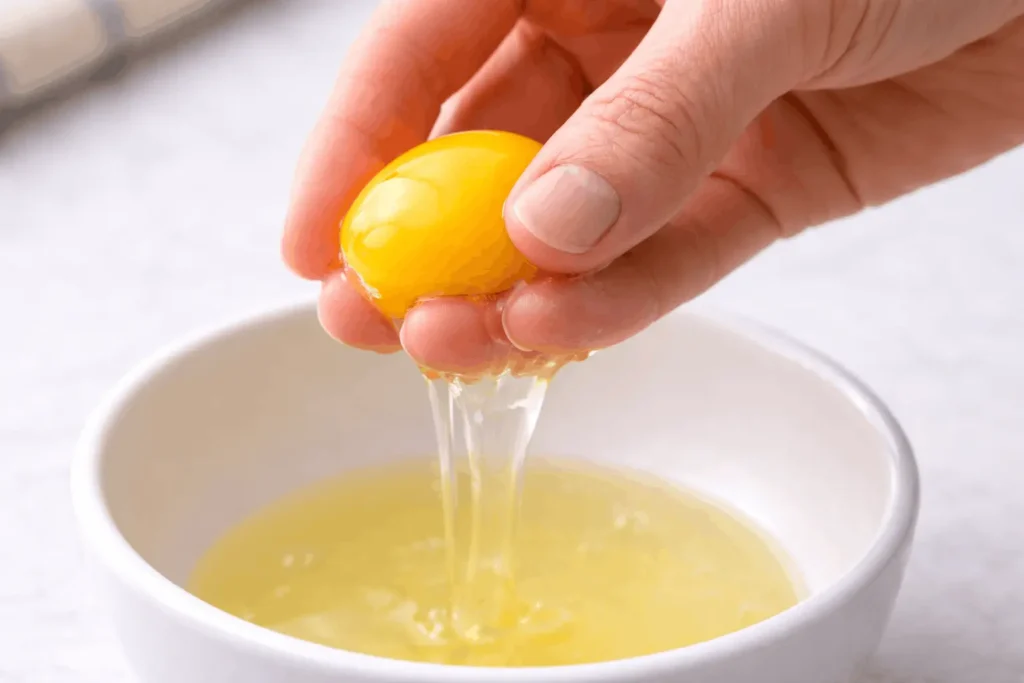
This method works well because your fingers act like a natural strainer.
Method 2: Shell-to-Shell Egg Separation
This is the traditional method most people learn first.
Many home cooks grow up using this method because it requires no tools.
Step-by-Step Instructions
- Crack the egg on a flat surface.
- Open the egg into two shell halves.
- Hold the egg over a bowl.
- Pass the yolk between the shell halves.
- Let the egg white fall into the bowl.
Be careful not to break the yolk while transferring it.
Method 3: Using an Egg Separator Tool
An egg separator tool makes the job very easy.
Step-by-Step Instructions
- Place the separator over a bowl.
- Crack the egg into the separator.
- Let the egg white drip through the holes.
- The yolk will stay inside the tool.
This method is useful for beginners.
It is also helpful when separating several eggs quickly.
Method 4: Bottle Method for Separating Eggs
This method became popular on social media.
Step-by-Step Instructions
- Crack an egg into a bowl.
- Take a clean plastic bottle.
- Squeeze the bottle gently.
- Place the bottle opening over the yolk.
- Release pressure to suck the yolk inside.
Then squeeze again to release the yolk into another bowl.
This method can work well, but it may become messy if the bottle is squeezed too hard or if the yolk breaks.
Method 5: Other Kitchen Hacks for Separating Eggs
Several kitchen tools can also help separate eggs.
These hacks are useful when you do not have a separator tool available.
- Slotted Spoon Method: Crack the egg into a slotted spoon. The egg white falls through the holes.
- Funnel Method: Place a funnel over a bowl. Crack the egg into the funnel. The white slips through while the yolk stays behind.
- Strainer Method: A small strainer works the same way. The egg white drains while the yolk remains in the strainer.
How to Separate Egg Whites and Egg Yolks Without a Separator
You do not need a special tool to separate eggs.
Several simple methods work well.
Using the Shell Method
Use the shell halves to transfer the yolk back and forth while the white drains into a bowl.
Using Your Hands
Lift the yolk with your fingers and let the white drip away.
Using a Bowl Method
Crack the egg into a bowl and gently scoop out the yolk.
These simple techniques are often used by home cooks who do not have specialized kitchen tools.
Which Egg Separation Method Is Best?
Different methods work best for different situations.
| Method | Difficulty | Tools Needed | Speed | Risk of Breaking Yolk |
|---|---|---|---|---|
| Hand method | Easy | None | Fast | Low |
| Shell method | Medium | None | Medium | Medium |
| Separator tool | Very easy | Tool | Medium | Very low |
| Bottle method | Easy | Bottle | Fast | Medium |
Many professional cooks prefer the hand method because it is fast and simple.
Is It Easier to Separate Eggs Cold or at Room Temperature?
Egg temperature can make a difference.
Why Cold Eggs Separate More Easily
Cold eggs have firmer yolks. This makes them less likely to break.
For this reason, many cooks separate eggs directly from the refrigerator. It is also helpful to know how long eggs last in the fridge so you can store them safely before cooking.
Older eggs may also separate slightly easier because the egg whites become thinner with time.
When Recipes Require Room Temperature Egg Whites
Some recipes require room temperature egg whites. This helps them whip more easily.
A simple solution is to separate the eggs while cold. Then allow the whites to sit for about 10 minutes before using them. If you plan to store separated whites, it helps to understand how long egg whites last in the fridge before using them in recipes. Some cooks also choose to freeze egg whites so they can use leftover whites in future recipes.
How Professional Bakers Separate Eggs Quickly
Professional kitchens often separate many eggs at once.
Bulk Egg Separation Technique
Crack several eggs into a bowl. Then lift the yolks out one by one with your hand.
This method is quick and efficient.
Using a Transition Bowl
Many bakers use a small bowl first. Each egg is separated individually before adding the whites to the main bowl.
Separate Eggs One at a Time
This prevents a broken yolk from ruining a whole batch of egg whites.
Tips for Separating Eggs Successfully
These simple tips make the process easier.
Crack Eggs on a Flat Surface
Cracking eggs on a flat surface reduces shell fragments and broken yolks.
Use Cold Eggs
Cold eggs separate more easily because the yolks stay firm.
Use Multiple Bowls
Using a small bowl first helps protect the rest of the egg whites.
Transfer Eggs Gently
Handle the yolk carefully so it does not break.
Removing Egg Shell Fragments
If a small piece of shell falls into the egg, use a wet finger or a piece of eggshell to lift it out easily. If an egg seems unusual in smell or texture, check how to tell if eggs are bad before using it.
Common Mistakes When Separating Egg Whites
Small mistakes can make the process harder.
Cracking Eggs on Bowl Edges
This can push shell fragments into the egg.
Breaking the Yolk
If the yolk breaks, it can mix with the whites.
Using Greasy Bowls
Even a small amount of fat can stop egg whites from whipping.
Mixing Eggs Too Quickly
Working too fast increases the chance of breaking the yolk.
What to Do If Egg Yolk Gets Into the Egg Whites
Sometimes the yolk breaks by accident.
Removing Yolk with Eggshell
Use a piece of eggshell to scoop out the yolk. The yolk sticks to the shell easily.
Using a Spoon to Remove Yolk
A small spoon can also remove the yolk.
When You Should Start Over
If too much yolk mixes into the whites, it may be best to start again. Yolk fat can prevent egg whites from whipping.
Science Behind Egg White and Egg Yolk Separation
Egg whites contain proteins that form a foam when whipped. Some recipes also use raw eggs, which raises safety questions about whether you can eat raw eggs.
Egg White Proteins and Foam Structure
When beaten, egg white proteins unfold and trap air bubbles. This creates foam that gives structure to baked goods.
Why Fat From Yolks Affects Whipping
Egg yolks contain fat. Fat breaks down the foam structure. Even a small amount can stop egg whites from forming stiff peaks.
FAQs About Separating Egg Whites
Is it easier to separate eggs cold?
Yes. Cold eggs have firmer yolks, which makes them easier to separate.
What is the fastest way to separate eggs?
Many cooks find the hand method the fastest because the egg white drains quickly through the fingers.
Can you separate eggs with a bottle?
Yes. A plastic bottle can create suction to lift the yolk from the egg white.
Can egg whites still whip if yolk gets in them?
Sometimes they can, but even a small amount of yolk fat can make whipping difficult.
Can you separate eggs ahead of time?
Yes. Egg whites and yolks can be separated ahead of time and stored in the refrigerator until needed. It is helpful to understand how long egg whites last in the fridge so you store them safely.
Troubleshooting Chart
| Problem | Possible Cause | Solution |
|---|---|---|
| Yolk breaks easily | Egg too warm | Separate eggs while cold |
| Egg whites will not whip | Yolk or grease contamination | Use a clean glass or stainless bowl |
| Shell pieces fall in | Egg cracked on bowl edge | Crack eggs on a flat surface |
| Messy separation | Using an awkward method | Try the hand separation method |
Conclusion
Separating egg whites may seem tricky at first, but it becomes simple once you understand the basic methods. Techniques such as using your hands, the shell method, or a separator tool allow you to keep the yolk intact and the egg whites clean. Working with cold eggs, using clean bowls, and separating eggs carefully can prevent most common mistakes. With a little practice, this skill becomes second nature and helps you prepare many recipes that rely on properly separated eggs.