Hard Boiled Eggs (How Long to Cook & How to Make Them Perfect)
Hard boiled eggs seem simple, yet they are surprisingly easy to get wrong. Maybe your yolks turned dry and crumbly. Maybe a green ring appeared around the center. Perhaps the shell stuck so badly that half the white tore away. Even small timing mistakes can change the texture completely.
If you’re searching for the exact cooking time right now, you’ll find it quickly below. If you want to understand why eggs overcook, how to avoid rubbery whites, and how to peel them cleanly every time, this guide walks you through it step by step. If you’re looking for a broader overview of boiling methods, you can also read our complete guide on how to boil eggs properly. The goal is simple: consistent, firm-yolk hard boiled eggs without guesswork.
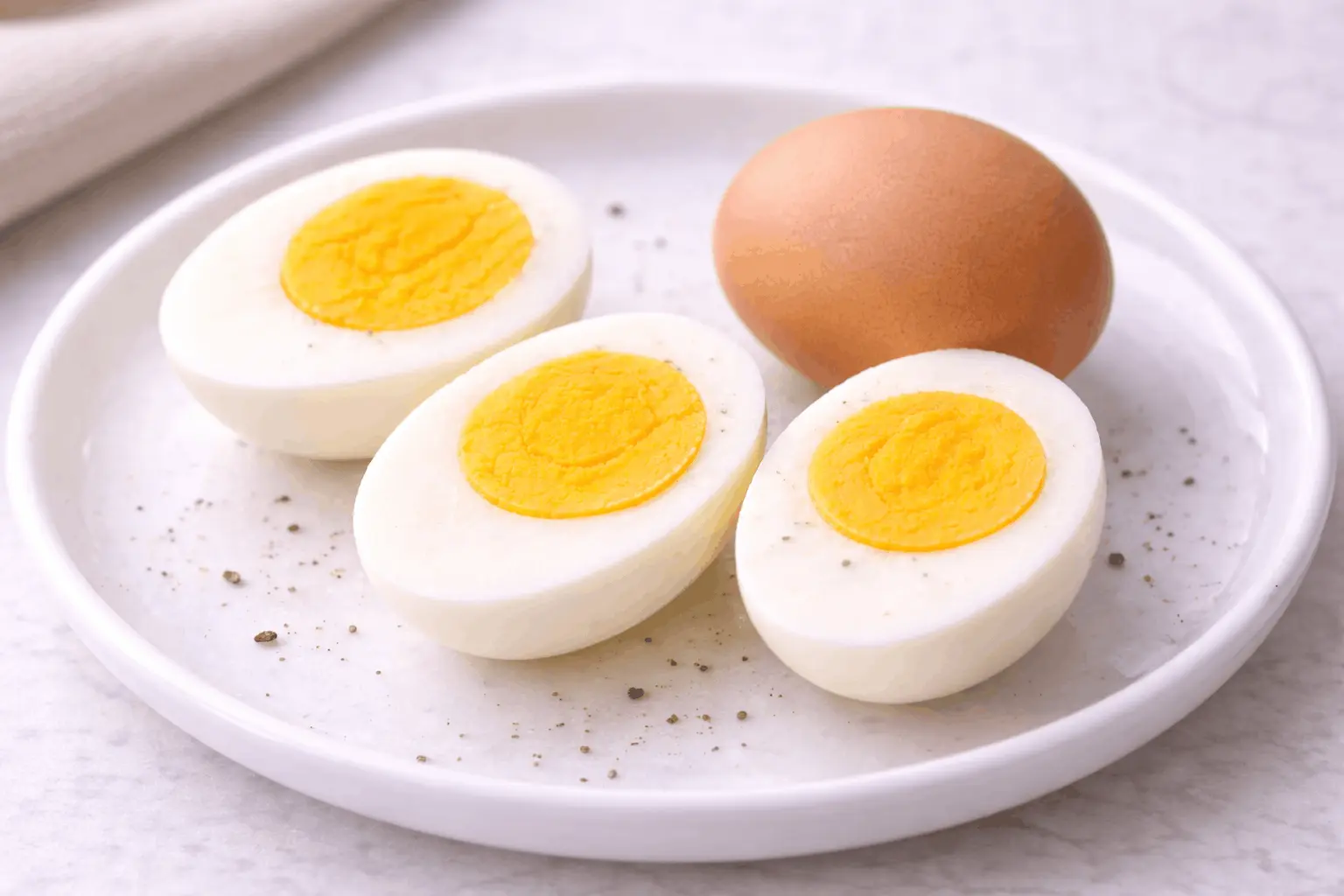
A hard boiled egg is an egg cooked in its shell until both the egg white and the yolk are fully set and firm.
Quick Answer: Hard Boiled Eggs Time
Hard boiled eggs take 9 to 11 minutes to cook once the water returns to a gentle boil.
- 8 minutes = slightly soft center
- 9 minutes = firm but slightly moist
- 10 minutes = fully firm and smooth
- 11–12 minutes = very firm and slightly dry
- 13–14 minutes = extra firm, more crumbly
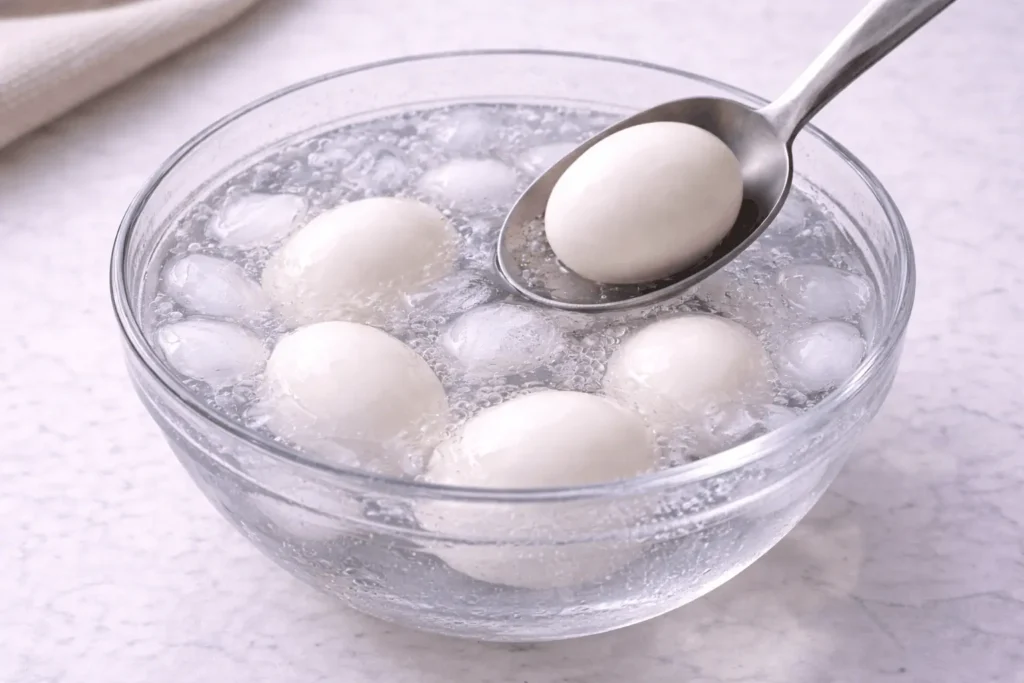
Immediately transfer the eggs to an ice bath. This stops carryover cooking and prevents the yolks from overcooking.
If you needed the timing quickly, this is your answer. For full control and consistent results, continue below.
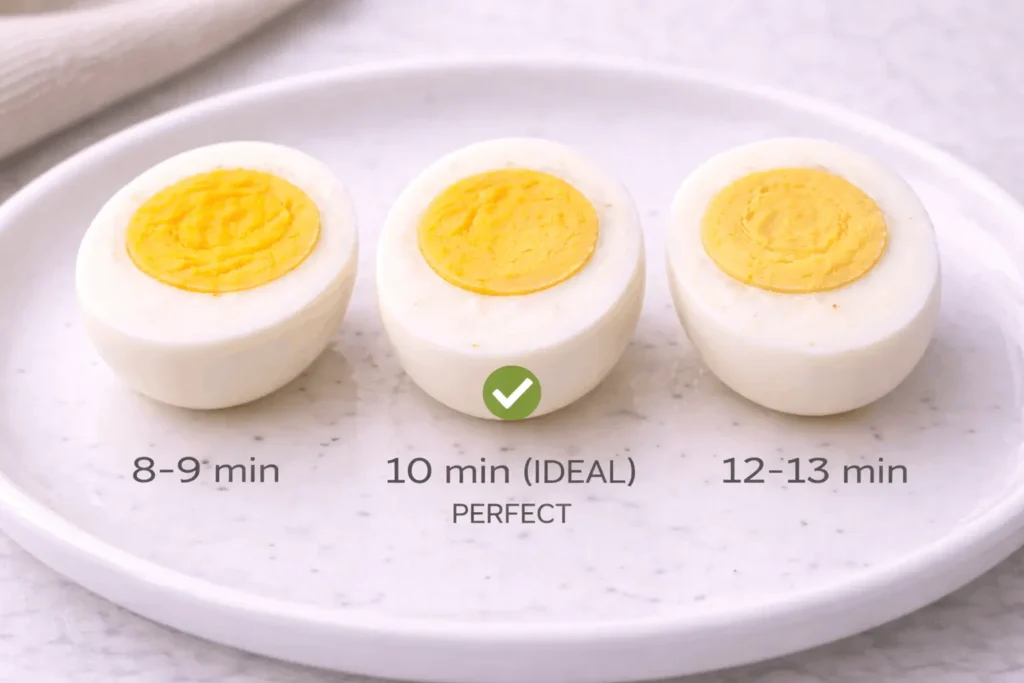
Hard-Boiled Egg Timing Charts
Hard Boiled Egg Timing Chart (Texture Explained)
| Cooking Time | Yolk Appearance | Texture Result |
|---|---|---|
| 8 minutes | Deep yellow center | Slightly soft core |
| 9 minutes | Bright yellow | Firm but moist |
| 10 minutes | Uniform yellow | Fully firm and smooth |
| 11–12 minutes | Pale yellow | Very firm |
| 13–14 minutes | Light yellow | Dry and crumbly |
For most kitchens, 10 minutes produces the ideal balance between firmness and tenderness.
Hard Boiled Eggs Time by Method
| Method | Cook Time | Best For | Notes |
|---|---|---|---|
| Boiling Water Start | 9–11 min | Most consistent results | Best overall control |
| Cold Water Start | 10–12 min covered rest | Hands-off cooking | Slight timing variation |
| Steaming | 12 min | Easy peeling | Consistent texture |
| Instant Pot | 5-5-5 method | Batch cooking | Very reliable |
| Air Fryer | 15–17 min at 270°F | No stovetop needed | Timing varies by model |
What Is a Perfect Hard Boiled Egg?
A perfect hard boiled egg has:
- Fully set white
- Firm but smooth yolk
- Bright yellow center
- No green or gray ring
- Tender texture, not rubbery
- Clean, easy peel
The yolk should slice cleanly without crumbling.
How to Make Hard Boiled Eggs (Most Reliable Method)
This boiling-water start method offers the best control.
What You Need
- Large eggs (cold from the refrigerator)
- Medium saucepan
- Water
- Slotted spoon
- Bowl filled with ice water
- Timer
Consistency begins with using the same egg size and pot each time.
Step-by-Step Instructions
- Bring water to a gentle boil. Avoid a rolling boil.
- Carefully lower the eggs into the water using a spoon.
- Wait for the water to return to a gentle boil.
- Start timing immediately.
- Cook for 9–11 minutes.
- Transfer eggs directly to an ice bath for at least 5 minutes.
Because eggs retain heat after removal, rapid cooling prevents overcooking.
Alternative Cooking Methods
Different kitchens use different tools. These methods also work.
Cold Water Start Method
- Place eggs in a single layer.
- Cover with cold water by 1 inch.
- Bring to a boil.
- Turn off heat and cover.
- Let sit 10–12 minutes.
- Transfer to ice water.
This method works well, although timing can vary slightly depending on pot size and heat level.
Steaming Method
Steaming often improves peeling.
- Bring 1 inch of water to a boil.
- Place eggs in a steamer basket.
- Cover and steam for 12 minutes (large eggs).
- Transfer to ice water.
Steam surrounds the shell evenly, which promotes consistent cooking.
Instant Pot Hard Boiled Eggs
A common pressure method is:
- 5 minutes pressure
- 5 minutes natural release
- Ice bath immediately
Pressure cookers vary slightly by model, so minor adjustments may be needed.
Air Fryer Hard Boiled Eggs
Cook at approximately 270°F for 15–17 minutes.
Air fryer temperatures vary by brand. Therefore, test once and adjust timing as needed.
Always cool immediately in ice water.
Troubleshooting Hard Boiled Eggs
Why Hard-Boiled Eggs Turn Green
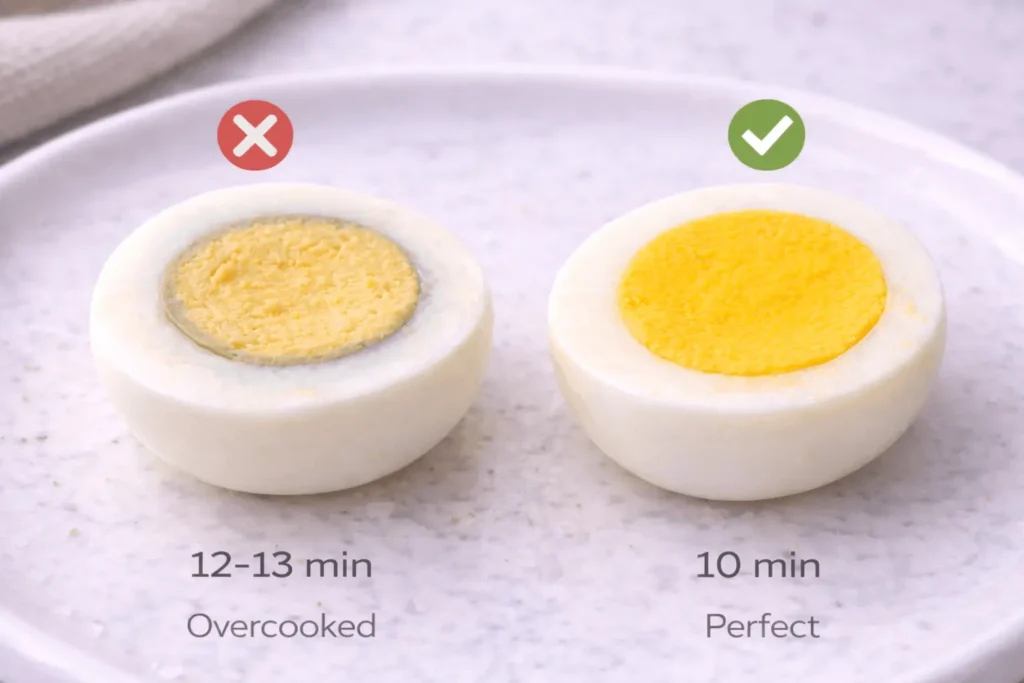
A green or gray ring around the yolk forms when eggs are overcooked.
Sulfur in the white reacts with iron in the yolk at high heat. This reaction creates the discoloration.
The egg is safe to eat. However, the texture may become dry and crumbly.
Avoid extended cooking times and cool quickly to prevent this.
Can You Overcook Hard-Boiled Eggs?
Yes. Overcooking leads to:
- Chalky yolks
- Dry texture
- Rubbery whites
- Strong sulfur smell
Precise timing and rapid cooling prevent these issues.
Quick Fix Guide
- Green yolk? → You overcooked it. Reduce time.
- Hard to peel? → Use slightly older eggs.
- Rubbery whites? → Lower the boil intensity.
- Dry yolk? → Shorten cooking time by 1 minute.
Why Older Eggs Peel Easier
As eggs age, their internal pH increases. This weakens the bond between the shell membrane and the egg white.
For that reason, slightly older eggs usually peel more easily than very fresh eggs.
Yolk Centering Tip Before Cooking
If you want a centered yolk, store raw eggs upside down in the carton for a day before boiling.
This helps reposition the air pocket and may keep the yolk more centered during cooking.
How to Peel Hard Boiled Eggs Easily
- Cool eggs completely in ice water.
- Tap the wider end first.
- Crack the shell into small pieces.
- Peel along natural fracture lines.
Starting from the wide end helps because the air pocket sits there.
Peeling under running water can help remove shell fragments smoothly. you can also read our complete guide on how to peel hard boiled eggs.
Should You Add Vinegar, Salt, or Baking Soda?
Some people add vinegar, salt, or baking soda to boiling water.
In most cases, these additions are unnecessary. Proper timing and rapid cooling have a greater impact on results.
Cooking Variables and Adjustments
Gentle Boil vs Rolling Boil (Why It Matters)
A strong rolling boil can cause eggs to bounce and crack. It can also toughen the whites.
A steady gentle boil protects the shell and produces smoother texture.
Temperature control is one of the most important factors in achieving perfect hard boiled eggs.
Egg Size Timing Adjustments
Large eggs are the standard reference.
| Egg Size | Timing Adjustment |
|---|---|
| Medium | Reduce by ~30 seconds |
| Large | Standard timing |
| Extra-Large | Add ~30 seconds |
Even small timing differences can affect yolk texture.
Hard-Boiled Eggs at High Altitude
At higher elevations, water boils at a lower temperature. Eggs cook more slowly.
If you live above 3,000 feet, add 30–60 seconds. Test and adjust slightly to match your preferred firmness.
Storage and Food Safety
How Long Do Hard-Boiled Eggs Last?
Hard boiled eggs last up to 1 week in the refrigerator when stored in their shells.
For detailed storage timelines, see how long hard-boiled eggs last.
Peeled eggs should be kept in an airtight container and eaten within a few days.
Do not leave cooked eggs at room temperature for more than 2 hours.
Can You Freeze Hard Boiled Eggs?
Freezing whole hard boiled eggs is not recommended because the whites become rubbery.
However, cooked yolks may be frozen separately.
How Many Eggs Can You Boil at Once?
You can boil several eggs at the same time as long as they sit in a single layer.
Avoid overcrowding the pot. Otherwise, the water temperature may drop and affect cooking time.
Nutrition and Uses
Nutrition Snapshot (1 Large Hard-Boiled Egg)
- Calories: ~70
- Protein: ~6 grams
- Fat: ~5 grams
- Carbohydrates: 0 grams
Ways to Use Hard Boiled Eggs
Hard boiled eggs are practical and versatile.
- Deviled eggs
- Egg salad
- Cobb salad
- Avocado toast topping
- Grain bowls
- Protein snack with salt and pepper
- Everything Bagel seasoning topping
They are ideal for meal prep and packed lunches.
Hard-Boiled vs Soft-Boiled vs Jammy
| Type | Cook Time | Yolk Texture |
|---|---|---|
| Soft | 4–6 min | Flowing |
| Jammy | 6–7 min | Custardy |
| Hard | 9–11 min | Fully firm |
Common Problems and Fixes
| Problem | Cause | Solution |
|---|---|---|
| Green ring | Overcooked | Reduce time |
| Rubbery white | High heat | Use gentle boil |
| Hard to peel | Very fresh egg | Use slightly older eggs |
| Cracked shell | Rolling boil | Lower heat |
| Dry yolk | Overcooked | Shorten cooking time |
Frequently Asked Questions
How long do hard boiled eggs take to cook?
Hard boiled eggs take 9 to 11 minutes after the water returns to a gentle boil for large eggs at sea level.
Do you start hard boiled eggs in cold water or boiling water?
Both methods work, but starting eggs in boiling water gives more consistent timing and texture control.
Why did my hard boiled eggs turn green?
A green ring forms when eggs are overcooked. Sulfur in the egg white reacts with iron in the yolk at high heat.
How do you peel hard boiled eggs easily?
Cool eggs completely in ice water, crack the wider end first, and peel under running water if needed.
Can you overcook hard boiled eggs?
Yes. Overcooked eggs may have dry yolks, rubbery whites, and a strong sulfur smell.
Key Takeaways
- Cook large eggs 9–11 minutes for firm yolks.
- Use a gentle boil instead of a rolling boil.
- Cool immediately in ice water.
- Adjust timing for egg size and altitude.
- Store refrigerated up to 1 week.
Final Thoughts
Making hard boiled eggs is not about luck. It comes down to timing, controlled heat, and rapid cooling. When you understand how temperature affects texture, you can adjust small details and get reliable results every time. A gentle boil, proper timing, and an ice bath are the foundation of consistency.
Whether you are preparing a quick snack, meal-prepping for the week, or aiming for perfectly sliced yolks in a salad, mastering these fundamentals removes frustration. With a repeatable method and attention to timing, hard boiled eggs become one of the easiest and most dependable foods to prepare.