Brown Eggs vs White Eggs: What’s the Difference?
Quick Answer
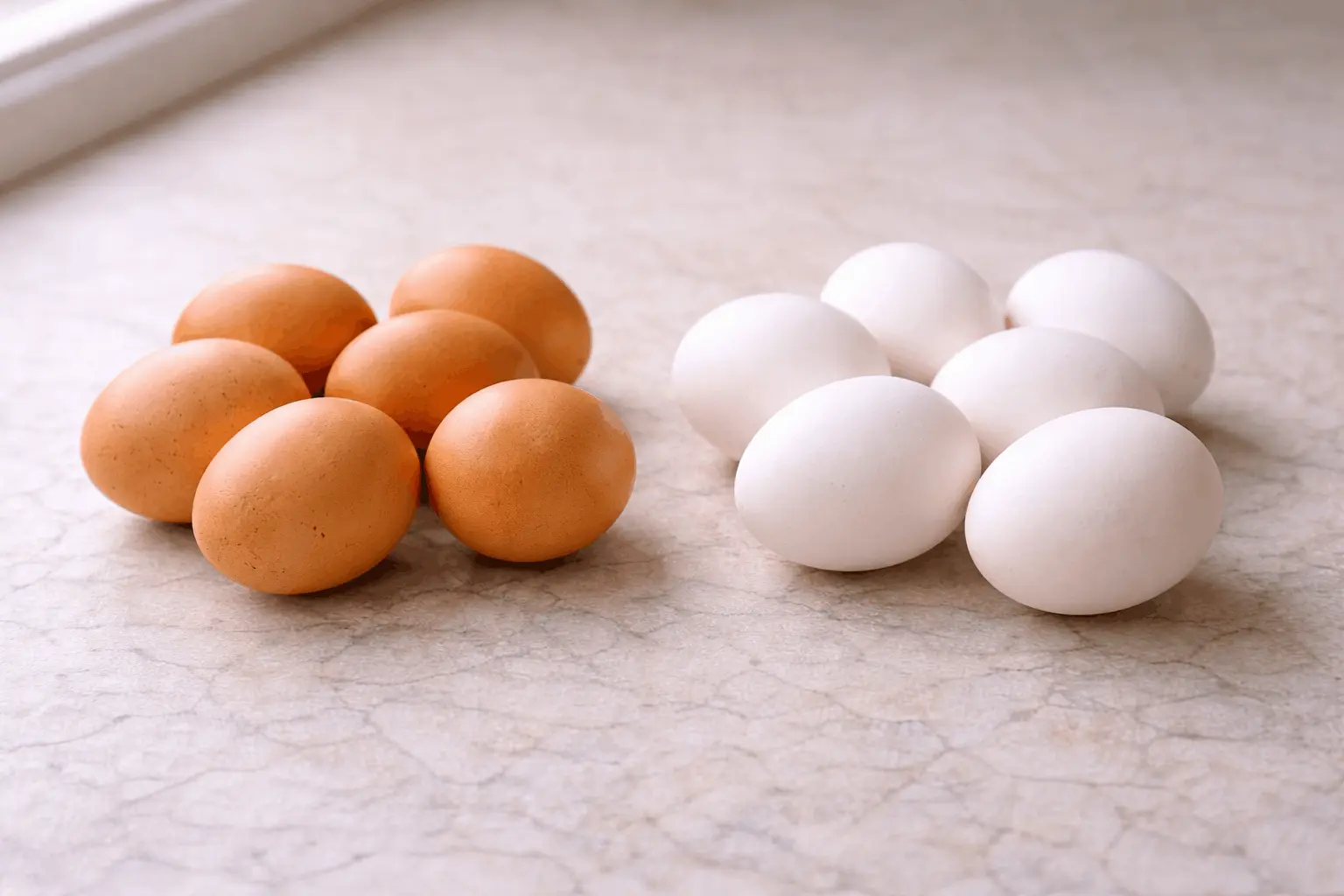
Brown eggs and white eggs are nutritionally the same when hens are raised the same way. The only real difference is shell color, which comes from chicken breed genetics—not egg quality, taste, or health.
You grab a carton of eggs and pause. Brown eggs cost more, and friends say they are healthier and more “natural.” Social media pushes organic and brown, but your budget says something else, and your family still needs breakfast. At the same time, you hear mixed messages from doctors, diet trends, and brands—one person warns about cholesterol in eggs, another calls eggs a perfect protein. It’s hard to know who to trust when you just want to feed your family well without wasting money.
At The Eggpedia, our focus is eggs. This article is based on published research, guidance from trusted organizations like the USDA, and real-world cooking experience. In simple terms, the only real difference between brown and white eggs is the shell color. Nutrition, taste, and quality are nearly identical when hens are raised the same way, because the breed of chicken determines egg color, not the quality of the egg. This guide is for you if you buy groceries, care about health, watch your budget, or want to make more ethical and environmentally friendly choices at the store.
Key Takeaways
- Brown eggs are not healthier than white eggs when the hens are raised the same way.
- Shell color is genetics, not a sign of quality.
- Price differences are mostly marketing and perception, not nutrition.
- Labels matter more than color (organic, pasture-raised, omega-3 enriched, etc.).
- Freshness affects taste and cooking results more than shell color.
What Are the Differences?
Why Are Some Eggs Brown and Some White?
The answer is simple. Egg color depends mostly on the breed of chicken that lays it. White chickens with white feathers and earlobes typically lay white eggs. Brown chickens with red or brown feathers usually lay brown eggs.
Common Chicken Breeds and Their Egg Colors
White Egg Layers:
- White Rock
- White Leghorn (most common for commercial white eggs)
- Cornish
Brown Egg Layers:
- Rhode Island Red
- Plymouth Rock
- New Hampshire
- Bovans Brown
- Lohmann Brown
The color comes from pigments that hens produce. As the egg moves through the hen’s oviduct, pigments are deposited on the shell. The main pigment in brown eggshells is called protoporphyrin IX. This compound is made from heme, which also gives blood its red color.
A hen’s age, diet, and stress level can change how light or dark the shell looks, but they do not turn a white egg into a brown egg or the other way around.
Eggs Come in Many Colors
Not all eggs are brown or white. Some chicken breeds lay eggs in other colors too. For example, Araucana and Ameraucana chickens lay blue or blue-green eggs. These eggs contain a different pigment called biliverdin. Olive Egger chickens can lay green eggs.
You might see these colorful eggs at farmers markets. They’re perfectly safe to eat. The color is just genetics, nothing more.
One important fact: all eggs start out white inside the hen. The color is added later as the egg passes through the oviduct. That’s why the inside of brown eggshells is always white.
Which Color Is Healthier?

Are Brown Eggs Healthier Than White Eggs?
No. Brown eggs are not healthier than white eggs. This is one of the biggest myths about eggs. Shell color has nothing to do with nutrition.
If you are health-conscious, the most important thing is how eggs fit into your whole diet and lifestyle, not what color the shell is. If you’re wondering about frequency, here’s a practical guide on how many eggs you can eat a day.
Scientific studies confirm this. Researchers have compared brown and white eggs many times. They found no meaningful nutritional differences based on shell color alone.
Both Brown and White Eggs Provide:
- About 70-80 calories per large egg
- 6-7 grams of high-quality protein
- Vitamins A, D, E, and B12
- Minerals like iron and selenium
- Healthy fats including omega-3s (in some eggs)
- Choline for brain health
The USDA FoodData Central confirms that egg nutrition depends on how hens are raised and fed, not shell color.
Brown vs. White Eggs at a Glance
| Factor | Brown Eggs | White Eggs | What Really Matters |
|---|---|---|---|
| Calories and protein | Very similar when size is the same | Very similar when size is the same | Choose the egg size your recipe calls for |
| Vitamins and minerals | Very similar when hens are raised the same way | Very similar when hens are raised the same way | Hen diet and living conditions affect nutrients |
| Taste | No consistent difference on its own | No consistent difference on its own | Freshness and feed have a bigger impact on flavor |
| Price | Often a bit higher in many grocery stores | Often a bit lower in many grocery stores | Price differences are mostly due to marketing and breed |
| Cooking and baking | Works the same in everyday cooking and baking | Works the same in everyday cooking and baking | Use whichever eggs are freshest and fit your budget |
| Health | Not automatically healthier or more natural | Not automatically less healthy or lower quality | Overall diet and lifestyle matter more than shell color |
Is There a Protein Difference Between Brown and White Eggs?
No. Brown and white eggs contain the same amount of protein. A medium-sized egg provides about 6-7 grams of protein, regardless of shell color.
However, protein content can vary slightly based on:
- Egg size (medium, large, extra-large, jumbo)
- How the hen is fed
- The hen’s age and health
But again, shell color makes no difference.
What does affect egg nutrition:
- Hen’s diet: Hens fed omega-3 enriched feed produce eggs with more omega-3 fatty acids. This works for both brown and white eggs.
- Hen’s access to sunlight: Hens that spend time outdoors produce eggs with 3-4 times more vitamin D than hens kept only indoors.
- Organic vs. conventional feed: While organic eggs aren’t necessarily more nutritious, organic hens aren’t given antibiotics routinely. They eat only organic, non-GMO feed.
So when you’re choosing eggs, focus on these factors instead of shell color. This is true whether you are trying to eat healthier, protect your heart, or manage your weight.
Yolk Color vs. Shell Color: What It Really Means
Here’s another common confusion. Many people think brown eggs have darker, richer yolks. This isn’t true.
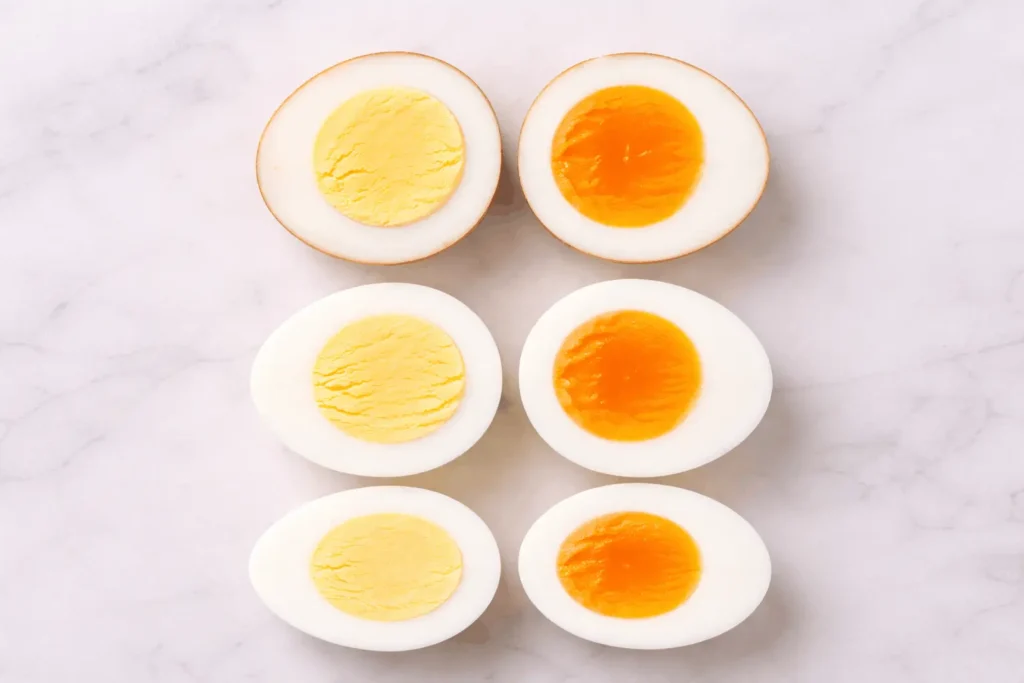
Yolk Color Depends on Diet:
- Pale yellow yolks: Hens fed mostly wheat or white corn
- Deep orange yolks: Hens fed corn, alfalfa, or feed with added pigments like marigold petals
You can find brown eggs with pale yolks and white eggs with deep orange yolks. The color tells you about the hen’s diet, not the shell color.
Some people prefer darker yolks because they look richer. But yolk color doesn’t affect nutrition significantly.
What matters more is whether the hen was fed omega-3 enriched feed or had access to pasture.
Commercial egg producers sometimes add natural pigments to chicken feed. This makes yolks more orange because consumers prefer that color. These pigments are safe and often come from natural sources like marigold flowers.
What About Taste?
Does One Color of Egg Taste Better?
No. Brown and white eggs taste the same when hens are raised the same way. Shell color doesn’t affect flavor.
However, eggs can taste different based on:
- Freshness: Fresher eggs taste better, regardless of color
- Hen’s diet: What the chicken eats affects egg flavor
- How you store eggs: Proper storage keeps eggs tasting fresh longer
- How you cook eggs: Cooking method changes flavor and texture
For consistent results every time, follow this step-by-step guide on how to boil eggs (soft, jammy, or hard).
Do Brown and White Eggs Taste Different?
From a scientific perspective, no. But many people report differences in taste. Why?
Usually, it comes down to freshness and how hens are raised. If you buy brown eggs from a local farm and white eggs from a grocery store, the local eggs might taste better.
That’s because they’re fresher, not because they’re brown.
Eggs from backyard chickens often taste “eggier” or richer. This happens because:
- They’re extremely fresh (sometimes collected the same day)
- Backyard hens often eat a varied diet including grass, bugs, and kitchen scraps
- They don’t go through processing and shipping
Cooking method matters too. One study found that scrambled eggs from hens fed fish oil tasted the same as regular eggs. However, when boiled, the fish oil eggs had a slight sulfur-like flavor. This shows that cooking method can bring out different flavors, but it has nothing to do with shell color.
The bottom line: if you want better-tasting eggs, focus on freshness and quality over shell color.
Why Do Brown Eggs Cost More?
Why Are Brown Eggs More Expensive?
Brown eggs often cost $0.50 to $1.00 more per dozen than white eggs. Many people assume this means they’re better quality. They’re not.
Historical reasons:
In the past, brown eggs cost more because the chickens that laid them were larger. These larger hens ate more feed and produced fewer eggs. To cover the extra costs, stores charged more for brown eggs.
Today, brown-laying hens are nearly as efficient as white-laying hens. Production costs are almost the same.
Modern reasons:
- Consumer perception: People believe brown eggs are more natural or healthier. Stores can charge more because of this belief.
- Premium positioning: Many organic, free-range, and pasture-raised eggs happen to be brown. This links brown eggs with premium products in shoppers’ minds.
- Marketing: Brown eggs are often marketed as farm-fresh or artisanal, even when they’re not.
- Supply and demand: In some US regions, especially the Northeast, brown eggs are more popular. Higher demand means higher prices.
The extra cost isn’t because brown eggs are better. It’s mostly about perception and marketing.
If Color Doesn’t Matter, What Does?
Shell color doesn’t tell you much. But other factors really do matter. Here’s what to look for when buying eggs.
Are Brown Eggs Organic?
Not necessarily. “Brown” and “organic” are completely different things.
Brown = shell color (determined by chicken breed)
Organic = how the hen is raised (feed, no antibiotics, outdoor access)
You can find:
- Brown organic eggs
- White organic eggs
- Brown conventional eggs
- White conventional eggs
Don’t assume brown eggs are organic. Always check the label.
What “organic” means in the US:
- Hens eat only organic, non-GMO feed
- No routine antibiotics (only if medically necessary)
- Year-round outdoor access
- Certified by USDA
Organic eggs aren’t necessarily more nutritious.However, organic standards provide better animal welfare and environmental practices.
Understanding Egg Labels
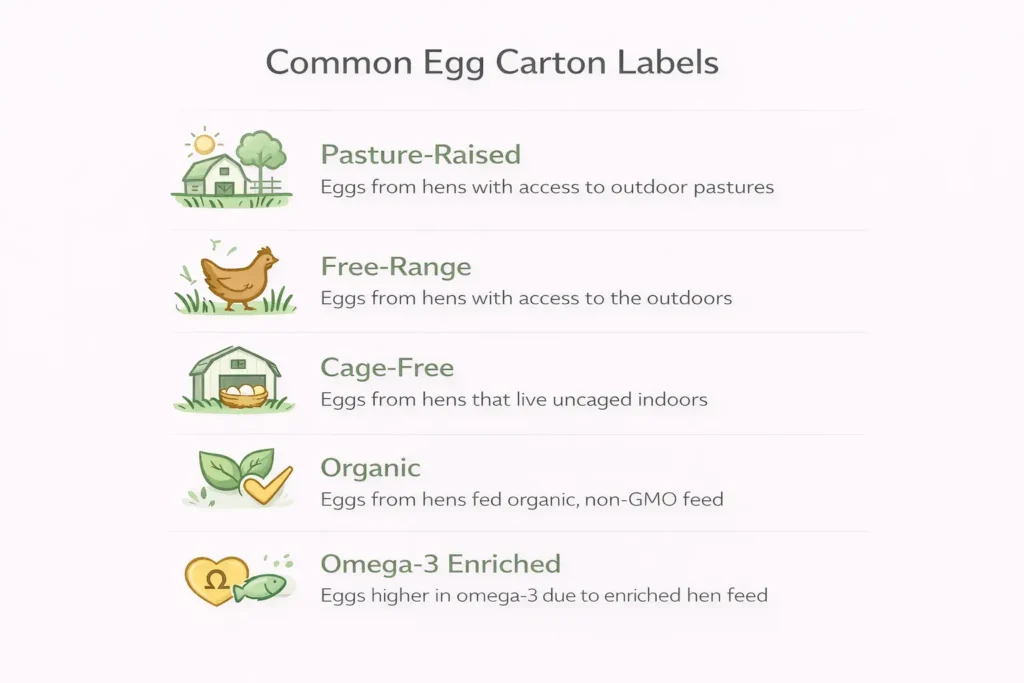
Here’s what common egg labels really mean:
“All Natural”
This label is basically meaningless. The USDA doesn’t regulate the term “natural” for eggs. All eggs are natural, so this tells you nothing.
“Cage-Free”
Hens live in open barns instead of cages. However, conditions can still be very crowded. Cage-free doesn’t mean outdoor access.
“Free-Range”
Hens have some access to the outdoors. However, “access” can mean a small door to a small outdoor area. Quality varies widely between farms.
“Pasture-Raised”
Generally the highest standard. Hens spend significant time outdoors on pasture. They can eat grass, bugs, and their natural diet. This often produces more nutritious eggs.
If animal welfare and environmental impact are important to you, focus more on “pasture-raised” and “free-range” than on shell color.
“Omega-3 Enriched”
Hens are fed flaxseed or fish oil to boost omega-3 content. These eggs can have several times more omega-3s than regular eggs. This can be a smart choice if you are health-conscious or do not eat much fish.
“Vegetarian-Fed”
Hens eat only plant-based feed (no animal byproducts). However, chickens are naturally omnivores. They eat bugs in nature.
“Hormone-Free”
This label can be misleading. Hormones are not allowed in egg production in the United States, so all eggs are hormone-free by law. The wording on the carton does not mean those eggs are safer or more nutritious than other eggs.
Grade AA vs. Grade A
This refers mainly to interior and shell quality, which is closely linked to freshness, not nutrition. Grade AA eggs have thicker whites and rounder yolks. Both are perfectly good to eat.
Brown vs. White Eggs: Common Myths and Misconceptions
Let’s bust some common myths:
Myth 1: White eggs are bleached
False. White eggs are naturally white. They’re never bleached. Eggs are washed before packaging, but not bleached.
Myth 2: Brown eggs are always from free-range chickens
False. Brown eggs can come from any type of farm, including large commercial operations with caged hens.
Myth 3: Brown eggs have thicker shells
Mostly false. Shell thickness depends on the hen’s age and breed, not color. Some brown-egg breeds do have slightly thicker shells, but it’s not about the color itself.
Myth 4: Fertile eggs are more nutritious
False. Fertile eggs (from farms with roosters) have the same nutrition as unfertile eggs. The tiny embryo makes no nutritional difference.
Myth 5: Brown eggs are better for baking
False. Shell color makes no difference in baking. Use whatever eggs you have.
Brown vs. White Eggs in Cooking and Baking
This section is especially helpful if you are a beginner cook or feel unsure in the kitchen.
Do Brown and White Eggs Cook Differently?
No. Both perform exactly the same.
Shell color doesn’t affect:
- How eggs hard-boil
- How eggs scramble
- How they fry
- How they bake
- How egg whites whip
What does affect cooking:
- Freshness: Fresh eggs are harder to peel when hard-boiled. Eggs that are 1-2 weeks old peel more easily.
- Egg size: Large eggs vs. extra-large changes measurements in baking.
- Temperature: Room-temperature eggs blend better in baking than cold eggs.
Are Brown Eggs Harder to Peel?
No.
Peeling depends on:
- Age: Older eggs peel more easily (7-14 days old is ideal)
- Cooking method: Adding baking soda to water or steaming eggs makes peeling easier
- Cooling method: Shocking eggs in ice water helps
Both brown and white eggs can be easy or hard to peel depending on these factors.
For more tips, check out our guide on how to peel hard-boiled eggs easily.
Can You Substitute Brown Eggs for White Eggs in Recipes?
Absolutely. Use them interchangeably in any recipe. Chefs and bakers do this all the time. The eggs perform identically.
How to Choose Between Brown and White Eggs at the Grocery Store
Ignore shell color. Instead, use this simple decision guide:
Step 1: Check the Date
Look for the freshest eggs possible. Check the “sell by” or “best by” date on the carton. Fresher eggs taste better and last longer in your fridge.
Step 2: Decide Your Priority
Budget-conscious?
- Choose standard white or brown eggs (whichever is cheaper)
- Grade A eggs work great for everyday cooking
- Store brands often cost less with no difference in quality
Animal welfare matters to you?
- Look for “pasture-raised”
- Then “free-range” or “organic”
- Then “cage-free”
Want extra nutrition?
- Choose omega-3 enriched eggs (any color)
- Look for “pasture-raised” for higher vitamin D
- Check if hens are fed organic feed
Want the best taste?
- Buy from local farms for maximum freshness
- Farmers market eggs are often collected within day
Want to save money?
- White eggs are often cheapest
- Store brands cost less
If you are on a tight budget, regular white eggs are a safe, smart choice. You still get the same protein and most of the same nutrients.
Step 3: Check the Storage at the Store
Make sure eggs are properly refrigerated. Avoid cartons with cracked or dirty eggs.
Simple Rules:
- Brown and white eggs = same quality
- Pay more only for labels that matter (organic, pasture-raised, omega-3)
- Freshness beats shell color
- Local eggs often taste better because they’re fresher
Backyard Eggs vs. Store-Bought: Why Colors Look Different
If you buy eggs from a neighbor or farmers market, you might see many colors in one carton. You might find brown, tan, white, speckled, blue, green, or olive eggs all together. Why?
Why Backyard Flocks Have Colorful Eggs
Small farms often keep mixed breeds of chickens. Different breeds lay different colored eggs.
Are Backyard Eggs Better?
Backyard eggs often taste better and have richer yolks.
It’s because:
- Diet is more varied:
Backyard hens often eat grass, bugs, kitchen scraps, and commercial feed. This varied diet can increase omega-3s and make yolks more orange. - Fresher:
You might get eggs collected that morning. Store-bought eggs can be weeks old by the time you buy them. - Better living conditions:
Small backyard flocks usually have more space, sunshine, and enrichment. This can lead to healthier hens and better eggs.
Important note about food safety:
Backyard eggs don’t go through the same washing and safety checks as commercial eggs. Only buy from sources you trust. Wash hands after handling. Store properly in the refrigerator. If you’re ever unsure, use these signs for how to tell if eggs are bad.
Commercial Eggs vs. Local Eggs
Most commercial operations use:
- Bovans Brown breeds
- White Leghorn chickens
This gives you uniform egg size and color. Local farms often prioritize variety, flavor, and bird personality over uniformity.
Both are safe and nutritious when handled properly.
FAQs
Are brown eggs healthier than white eggs?
No. Brown eggs are not healthier than white eggs. Shell color has nothing to do with nutrition.
Do brown eggs taste better than white eggs?
No. Brown and white eggs taste the same when hens are raised the same way. Differences people notice usually come down to freshness and how hens are raised.
Why are brown eggs more expensive?
Brown eggs often cost more due to consumer perception, premium positioning, marketing, and regional supply and demand—not because they are higher quality.
Are white eggs bleached?
False. White eggs are naturally white. They’re never bleached.
Does shell color affect yolk color?
No. Shell color and yolk color are completely unrelated. Yolk color depends on what the hen eats.
The Bottom Line
Brown eggs and white eggs are essentially the same—the only real difference is shell color, which comes from the chicken breed. When hens are raised the same way, nutrition, protein, and taste are nearly identical.
Many studies and official sources, including USDA data and poultry science research, agree that shell color is not a reliable sign of health, quality, or safety.
Focus on:
- Freshness
- How hens are raised
- Whether you want omega-3 enrichment
- What fits your budget
Shell color simply reflects genetics.
Sources:
– USDA FoodData Central
– American Egg Board
– Poultry Science Journal
– Michigan State University Extension
– FDA Food Safety Guidelines
Disclaimer: This article provides general information only and is not medical or nutritional advice. Always talk to your doctor or registered dietitian about your specific dietary needs.


