How to Tell If Eggs Are Bad (Simple Tests That Actually Work)
Eggs are one of the most common foods in American kitchens, but they are also one of the most confusing. You open the fridge, pick up an egg, and pause. Maybe the carton has been there longer than you remember. Maybe the egg floats in water or smells a little strange. In that moment, a simple question becomes important: is this egg safe to eat, or should it be thrown away?
Most people want to avoid wasting food, but no one wants food poisoning. Advice online can be mixed and sometimes misunderstood. Some tips are helpful, while others are taken out of context. This guide focuses on clear, practical checks that food safety experts commonly recommend. You’ll learn how to tell if eggs are bad using simple methods you can do at home, and you’ll know when it’s safer to discard them.
Key Takeaways
- The smell test is the most reliable way to spot a bad egg
- A floating egg is old, not always spoiled
- Crack eggs into a bowl first to avoid contamination
- Some changes look strange but are normal and safe
- When you’re unsure, throw the egg away
Quick Answer: How Can You Tell If Eggs Are Bad?
You can tell if eggs are bad by checking the smell, the shell, and the inside of the egg after cracking it open. A spoiled egg usually has a strong sulfur smell and may show unusual colors or slime. Tests like the float test can give clues about an egg’s age, but they do not reliably confirm safety. When there is any doubt, discarding the egg is the safer option.
The 30-Second Egg Check: When to Use vs When to Toss
If you need a fast decision, this simple check helps.
When Eggs Are Safe to Use
- The shell is clean and dry
- No cracks, leaks, or slime
- No bad smell after cracking
- Egg white is clear or slightly cloudy
- Yolk is whole and rounded
When You Should Throw Eggs Away Immediately
- Strong sulfur or rotten smell
- Slimy or moldy shell
- Cracked and leaking eggs
- Pink, green, black, or iridescent colors
- Bad smell before or after cracking
Use vs Toss Decision Table
| Situation | Safe to Use? | Why |
|---|---|---|
| Egg smells normal | ✅ Yes | Smell is the most reliable indicator |
| Egg smells sulfur-like | ❌ No | Indicates spoilage |
| Egg floats but smells fine | ⚠️ Maybe | Shows age, not guaranteed spoilage |
| Shell is slimy or moldy | ❌ No | Possible contamination |
| Egg white is cloudy | ✅ Yes | Normal in fresh eggs |
| Egg white is pink or green | ❌ No | Possible bacterial growth |
| Egg cracked at store | ❌ No | Bacteria may have entered |
| Egg cracked at home | ⚠️ Use soon | Higher risk, but not spoiled yet |
Freshness vs Spoilage: Why Eggs Can Be Old but Still Safe
Freshness and spoilage are not the same. As eggs age, their quality changes. The whites may become thinner, and the yolk may flatten. These changes affect texture, not safety. If you’re wondering about overall health impact beyond spoilage, read are eggs good for you.
A spoiled egg, however, is unsafe. It usually smells bad or shows abnormal colors or slime. This difference explains why some eggs float but still smell normal. Floating usually means the egg is older, not necessarily spoiled.
For storage timelines and aging details, see our guide on how long eggs last in the fridge.
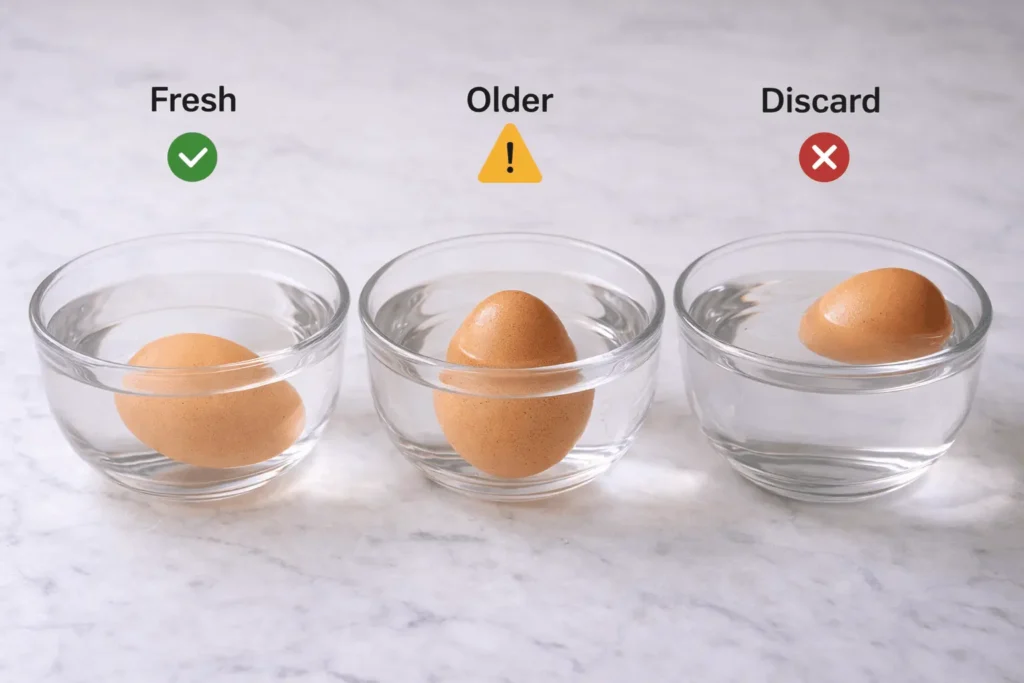
The Float Test: What It Tells You (and What It Doesn’t)
The float test is common but often misunderstood.
What It Means If an Egg Sinks
The egg is usually fresher.
It has a smaller air pocket.
What It Means If an Egg Stands Upright
The egg is older and should be used soon.
What It Means If an Egg Floats
The egg is very old.
It has a large air pocket.
Why the Float Test Shows Age, Not Guaranteed Spoilage
Eggshells are porous. Air slowly enters the egg over time. That makes older eggs float. Floating alone does not confirm spoilage. You should still crack and smell the egg. Some food safety sources recommend discarding floating eggs if you feel unsure.
What Each Test Can and Cannot Tell You
| Test | What It Tells You | What It Cannot Tell You |
|---|---|---|
| Smell test | Spoilage | Exact age |
| Float test | Age | Safety |
| Visual check | Obvious contamination | Early bacteria |
| Shake test | Texture change | Spoilage |
The Smell Test: The Most Reliable Way to Spot a Bad Egg
The smell test is one of the most reliable checks.
What a Bad Egg Smells Like
A spoiled egg smells strongly of sulfur.
The odor is unpleasant and obvious.
Why Rotten Eggs Smell Like Sulfur
As eggs spoil, bacteria break down proteins.
This releases hydrogen sulfide gas.
Why You Should Always Crack Eggs Into a Bowl First
Crack eggs into a clean bowl, not straight into the pan. This helps you catch bad eggs early and avoid spreading bacteria to other food.
How to Check Eggs Before Cracking Them
Cracks, Leaks, and Slimy Shells
Cracks and leaks allow bacteria inside.
Slimy shells can also signal spoilage.
Mold or Powder on the Shell
Any mold means contamination.
Washing does not make the egg safe.
Eggs That Were Dropped or Damaged
If the shell breaks, bacteria can enter quickly.
Use immediately or discard.
How to Check Eggs After Cracking Them Open
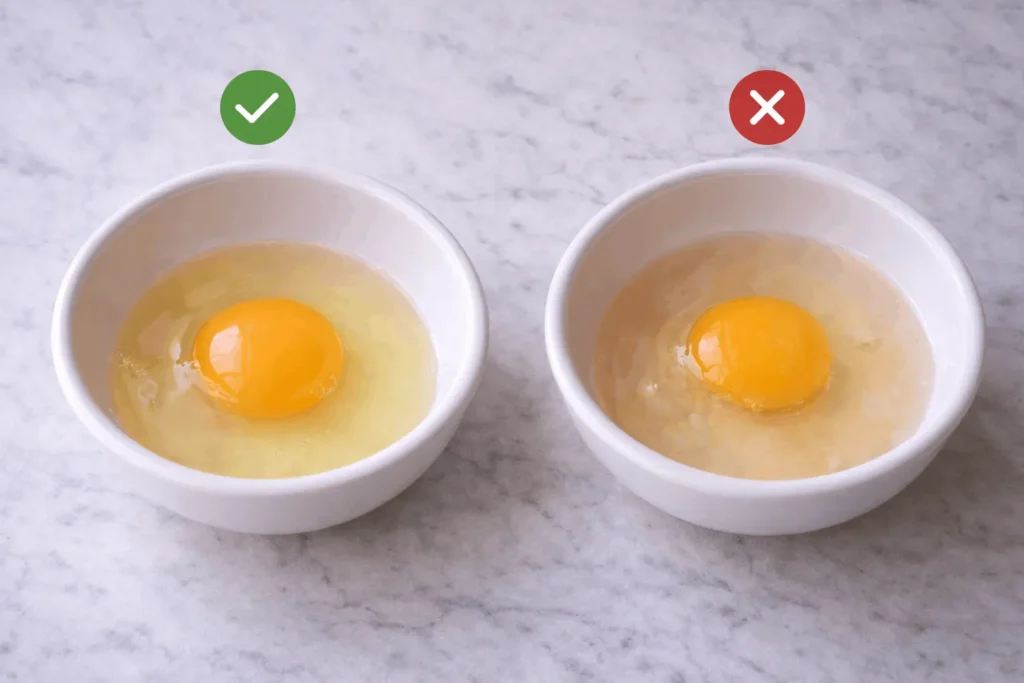
What Egg Whites Should Look Like
Clear or slightly cloudy whites are normal.
Watery whites usually mean the egg is older.
What Egg Yolks Should Look Like
Yolks should be firm and rounded.
Color varies naturally.
Normal vs Not Normal After Cracking
Normal (Safe)
- Cloudy whites
- Watery whites
- Blood spots
- White stringy bits (chalaza)
Not Normal (Discard)
- Pink egg whites
- Green or black spots
- Iridescent or rainbow sheen
- Slime or strong odor
If you’re curious about egg whites specifically, see our full comparison on whole eggs vs egg whites.
The Shake Test: Is It Actually Useful?
What the Shake Test Can Tell You
Loud sloshing usually means the egg is old.
Why the Shake Test Is Not a Safety Test
It does not detect bacteria.
It should not be used alone.
Carton Dates Explained: Sell-By vs Best-By vs Pack Date
Carton dates reflect quality, not safety.
Do Eggs Go Bad After the Date on the Carton?
Not always. Properly stored eggs may still be safe. Always rely on smell and appearance, not dates alone. For more details, read
how long eggs last.
Common Egg Scenarios People Ask About
If an Egg Floats but Smells Fine
It may still be safe when fully cooked.
Discard if unsure.
If Eggs Are Past the Date but Refrigerated
They may still be safe.
Check smell and appearance.
If you eat eggs often, review intake guidance in how many eggs can you eat a day.
If Eggs Were Left Out at Room Temperature
If left out for several hours, especially in warm conditions, it’s safer to discard them. We explain this further in our Read our full guide on egg storage rules: fridge shelf vs door.
If an Egg Is Cracked
Cracked at store → throw away
Cracked at home → use immediately
Farm Eggs vs Store-Bought Eggs
Unwashed farm eggs have a natural coating, but refrigeration is still recommended for safety.
Why Cooked Eggs Sometimes Smell Sulfur Without Being Spoiled
Overcooked eggs can smell sulfur-like. (Proper timing can reduce this. See how to boil eggs for balanced cooking steps.) This comes from natural sulfur compounds released during cooking. If the egg smelled normal before cooking, it is usually safe. Learn more in how long hard-boiled eggs last.
What Happens If You Eat a Bad Egg
Eating a spoiled egg can cause foodborne illness. If you are using eggs in recipes that are not fully cooked, see can you eat raw eggs for safety guidance.
Symptoms
Nausea, stomach cramps, diarrhea, vomiting, and sometimes fever.
Who Is at Higher Risk
Children, pregnant people, older adults, and people with weakened immune systems should be extra cautious. Pasteurized eggs may be safer for high-risk groups. We cover this in our upcoming article on eggs during pregnancy and safety.
Egg Safety Checklist
Check the shell.
Crack into a bowl.
Smell immediately.
Look for odd colors or slime.
When unsure, throw it out.
Frequently Asked Questions About Bad Eggs
Can eggs be bad without smelling?
Yes, but it is uncommon.
Can you eat eggs that float?
Sometimes, if they smell normal and are fully cooked.
Are watery egg whites bad?
No. They usually mean the egg is older.
Can cooking make bad eggs safe?
Cooking reduces risk, but it does not fix spoiled eggs.
When in doubt?
Throw the egg away.
How do I peel hard-boiled eggs easily?
If your peel is stubborn, our guide on how to peel hard boiled eggs shows easy, reliable methods.
The EggPedia Bottom Line
Knowing how to tell if eggs are bad is a basic food safety skill. In most cases, smell and visual checks give the clearest answers. Tests like the float test can explain age, but they do not replace direct inspection. Food safety guidance consistently recommends caution: if an egg smells off or looks abnormal, it should not be eaten. When there is uncertainty, discarding the egg is the safer choice. At TheEggPedia, our goal is to provide clear, accurate information that helps people make confident decisions in everyday kitchens.

