
How Many Eggs Can You Eat a Day? Safe Daily Intake Explained
Eggs are part of everyday meals for many people. They are simple, filling, and easy to cook. But when it comes to how many eggs you should eat, things often feel unclear. You may hear different advice from different places, and it can be hard to know what actually makes sense.
If you eat eggs regularly, you might be wondering if you are eating too many or if it is safe to keep eating them every day. Most people just want a clear and practical answer they can follow. So, how many eggs can you eat in a day without overdoing it? The answer depends on a few simple factors, and once you understand them, it becomes much easier to decide what works for you.
Quick Answer: How Many Eggs Per Day Is Safe?
For most healthy people:
- 1–2 eggs per day is safe
- 2–3 eggs per day may be fine for active people, depending on their overall diet and health
- People with health conditions may need to eat fewer eggs
Eating eggs every day is not harmful for most people. What matters more is your overall diet.
👉 According to health experts, including guidance from organizations like the American Heart Association, eggs can be part of a healthy diet when eaten in moderation.
For most people looking for a simple answer, 1–2 eggs per day is a safe and practical range.
📊 Daily Egg Intake Guide
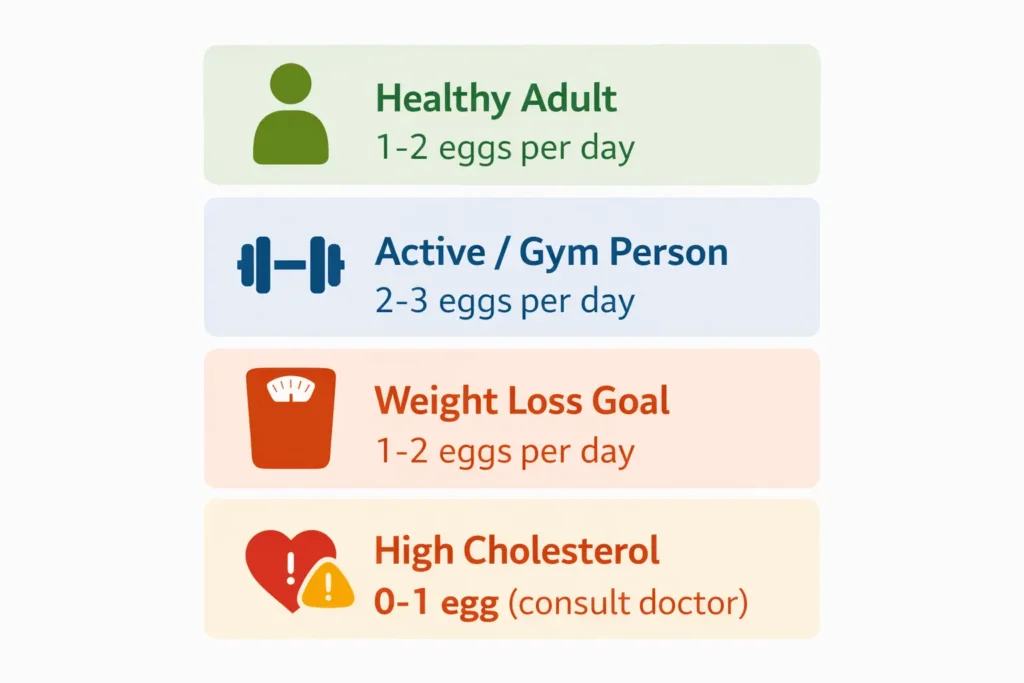
Why There’s No One-Size-Fits-All Answer
Your ideal egg intake depends on a few things:
- Your age
- Your activity level
- Your overall diet
- Your health condition
For example, a person who exercises daily may need more protein. They can eat more eggs. But someone with high cholesterol may need to limit egg intake.
In addition, your overall eating pattern matters more than one single food. Even if you eat eggs every day, your total diet plays a bigger role in your health.
Egg Nutrition: What You Get From One Egg
One large egg gives you:
- About 70–75 calories
- Around 6 grams of protein
- Healthy fats
- Vitamins like B12 and D
- Choline, which supports brain health
- Selenium, which helps protect cells
- Lutein and zeaxanthin, which support eye health
Eggs are a complete protein. This means they contain all essential amino acids your body needs.
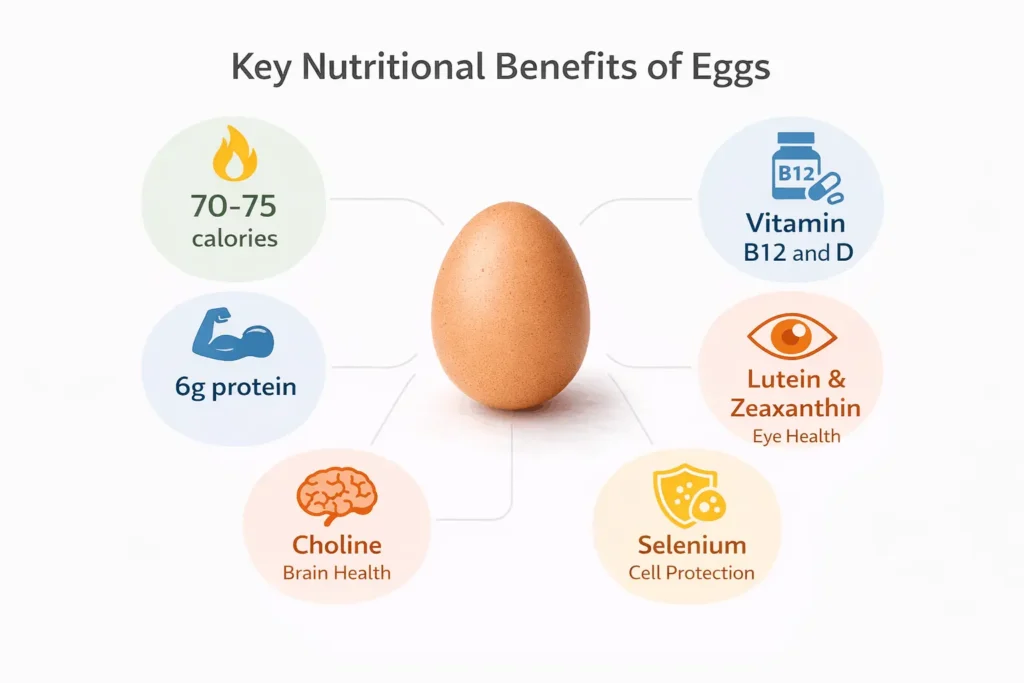
Because of this, eggs are often used by people trying to improve their diet, build muscle, or stay full longer.
🥚 Egg Nutrition Snapshot (Per Large Egg)
- Calories: ~70–75
- Protein: ~6g
- Cholesterol: ~180–200 mg
- Key nutrients: B12, choline, selenium
Eggs and Cholesterol: Are Eggs Bad for You?
Many people worry about cholesterol in eggs.
Here’s the simple truth:
- Eggs contain dietary cholesterol
- But this does not always raise blood cholesterol
Your body makes its own cholesterol. For most people, eating eggs has a small effect.
There are two types of cholesterol:
- LDL (bad cholesterol)
- HDL (good cholesterol)
Eggs may help increase HDL in some people.
Research shows that dietary cholesterol has less impact on blood cholesterol than saturated fat. This is why foods like processed meat and butter can have a stronger effect on heart health.
Your overall lipid profile, which includes LDL and HDL levels, depends more on your total diet and lifestyle.
👉 For most people, eggs are not the main cause of heart disease. What you eat with eggs matters more.
What Happens If You Eat Eggs Every Day?
Eating eggs daily can be good for you. But balance is key.
Benefits of Eating Eggs Every Day
- Helps you feel full longer (satiety)
- Supports muscle growth
- Provides important nutrients
- Supports brain and eye health
- May support metabolic health
Eggs can also help reduce snacking because they keep you full for longer periods.
Possible Side Effects of Eating Too Many Eggs
- Too much cholesterol for some people
- Less variety in your diet
- Digestive discomfort in rare cases
For most healthy people, moderate egg intake does not increase cardiovascular risk. The effect depends on your overall diet and lifestyle.
Is It OK to Eat Eggs Every Day?
Yes, for most people, it is okay to eat eggs every day.
If you eat eggs as part of a balanced diet, they can support your health. However, people with certain conditions should monitor their intake more closely.
For healthy individuals, daily egg consumption is generally safe and can be part of a healthy routine.
How Many Eggs a Day Is Too Many?
There is no strict limit for everyone. But here is a simple guide:
- 1–2 eggs per day → safe for most people
- 3 eggs per day → usually fine for healthy people when part of a balanced diet
- 4 or more eggs daily → depends on your lifestyle and health
Eating too many eggs regularly without balancing other foods may affect long-term health.
Is 1, 2, 3, or 4 Eggs a Day Too Much?
Is 1 Egg a Day Enough?
Yes. It provides protein and nutrients. It is a safe choice for almost everyone.
Is 2 Eggs a Day Healthy?
Yes. Many people eat 2 eggs daily without any issues.
Is 3 Eggs a Day Too Much?
For healthy and active people, this is usually fine. People who exercise regularly may handle higher intake better.
Is 4 Eggs a Day Safe?
It can be safe for some people, especially athletes. But it may not suit everyone. Monitoring your diet is important at higher intake levels.
📊 1 vs 3 Eggs a Day Comparison
| Intake | What It Means |
|---|---|
| 1 egg/day | Safe and balanced |
| 2 eggs/day | Common healthy intake |
| 3 eggs/day | Higher protein, fine for active people |
What Happens If You Eat 3–6 Eggs a Day?
Eating 3–6 eggs daily is common among bodybuilders.
Short-term:
- High protein intake
- Supports muscle growth
Long-term:
- May increase cholesterol in some individuals
- May affect insulin sensitivity if diet lacks balance
Some people tolerate higher egg intake well, especially if they are active. However, long-term health depends on total diet quality.
If you eat this many eggs, make sure your diet includes vegetables, fiber, and healthy fats.
How Many Eggs Should You Eat Based on Your Goals?
How Many Eggs for Weight Loss?
- 1–2 eggs per day
- Helps control hunger
- Supports calorie control
Eggs can help reduce hunger and make it easier to manage calorie intake.
How Many Eggs for Muscle Gain?
- 2–3 eggs per day
- High protein supports muscle repair
People who train regularly may benefit from slightly higher intake.
How Many Eggs Should You Eat for Breakfast?
- 1–3 eggs is common
- Pair with healthy foods like vegetables
How Many Eggs Can You Eat If You Have Health Conditions?
High Cholesterol or Heart Disease
- Limit egg intake
- Monitor your lipid profile
- Follow medical advice
Diabetes
- Eat eggs in moderation
- Focus on overall diet quality
Some studies suggest that people with metabolic conditions should be more careful with high egg intake.
Whole Eggs vs Egg Whites: How Many Should You Eat?
- Whole eggs give full nutrition
- Egg whites give protein with no cholesterol
If you want more protein with fewer calories, you can combine whole eggs with egg whites.
👉 Many people can safely eat 3–6 egg whites per day, depending on their protein needs and overall diet. Egg whites are low in calories and are often used by people focused on fitness or weight loss.
How Many Boiled Eggs Can You Eat a Day?
Boiled eggs are one of the healthiest ways to eat eggs.
- 1–2 boiled eggs per day is safe
- No added fat
- Keeps calories low
Boiled vs Fried Eggs: Does Cooking Method Matter?
Yes, it matters.
- Boiled eggs → no added fat
- Fried eggs → may include oil or butter
Cooking eggs with less fat is better for heart health and helps reduce inflammation risk.
Eggs Per Day vs Eggs Per Week — What Matters More?
Some people prefer weekly limits.
Example:
- 7–14 eggs per week is common
👉 Some general nutrition guidance suggests that spreading egg intake across the week can help maintain balance. For many healthy adults, staying within a moderate weekly range works well.
This gives flexibility. You can eat more on some days and fewer on others.
How Eggs Fit Into a Healthy Daily Diet
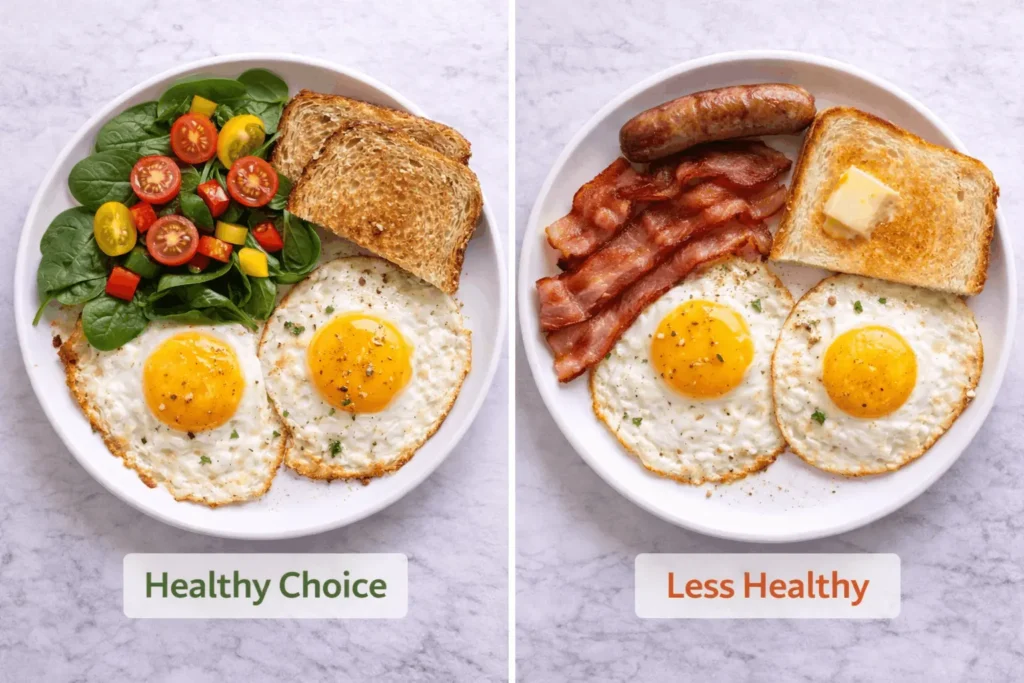
Eggs alone are not the problem. What you eat with them matters.
Healthy example:
- Eggs with vegetables
Less healthy example:
- Eggs with processed meat and refined foods
A balanced diet has a bigger impact on long-term health than egg intake alone.
What Type of Eggs Are Best for Daily Consumption?
You can choose:
- Regular eggs
- Cage-free eggs
- Pasture-raised eggs
- Omega-3 enriched eggs
Nutritional differences are small, but some options may contain slightly higher omega-3 fats.
Is It Better to Eat Eggs in the Morning or Later in the Day?
Eggs are often eaten at breakfast.
- They keep you full longer
- Help control appetite
However, you can eat eggs at any time of the day.
Will Eating Eggs Every Day Cause Weight Gain?
No, eggs do not cause weight gain by themselves.
Weight gain depends on total calorie intake. Eggs can support weight loss because they help control hunger.
Signs You May Be Eating Too Many Eggs
- You feel bloated
- Your diet lacks variety
- You rely too much on eggs
A varied diet is important for overall health.
Who Should Limit Egg Intake?
Some people should be careful:
- People with high cholesterol
- People with heart disease
- People with specific medical conditions
If unsure, consult a healthcare professional.
Common Myths About Eating Eggs
- Myth: Eggs are bad for your heart
→ Not true for most people - Myth: Brown eggs are healthier
→ No real difference - Myth: Eating eggs every day is harmful
→ Safe for most people when part of a balanced diet
FAQs About Egg Consumption
Can I eat 4 eggs a day?
Yes, but it depends on your health and lifestyle.
Is 6 eggs a day too much?
For most people, this is a high intake.
Can you eat too many eggs?
Yes. Too much of any food is not ideal.
Is eating boiled eggs every day safe?
Yes, if eaten in moderation.
How many eggs should I eat in a day?
1–2 eggs per day works for most people.
Quick Takeaway
- Most people: 1–2 eggs per day
- Active people: up to 3 eggs
- Health conditions: limit intake
- Overall diet matters more than egg count
Final Verdict: How Many Eggs Should You Eat Daily?
Here’s a simple guide:
- Healthy adults: 1–2 eggs per day
- Active people: up to 3 eggs per day
- People with health conditions: limit intake
Eggs are healthy, but balance is key. Focus on your overall diet, not just the number of eggs.
For most readers, the safest and easiest approach is to stay within a moderate range and adjust based on your lifestyle.
check out the grasshopper cookies recipe https://www.yourcupofcake.com/ultimate-grasshopper-cookies/


