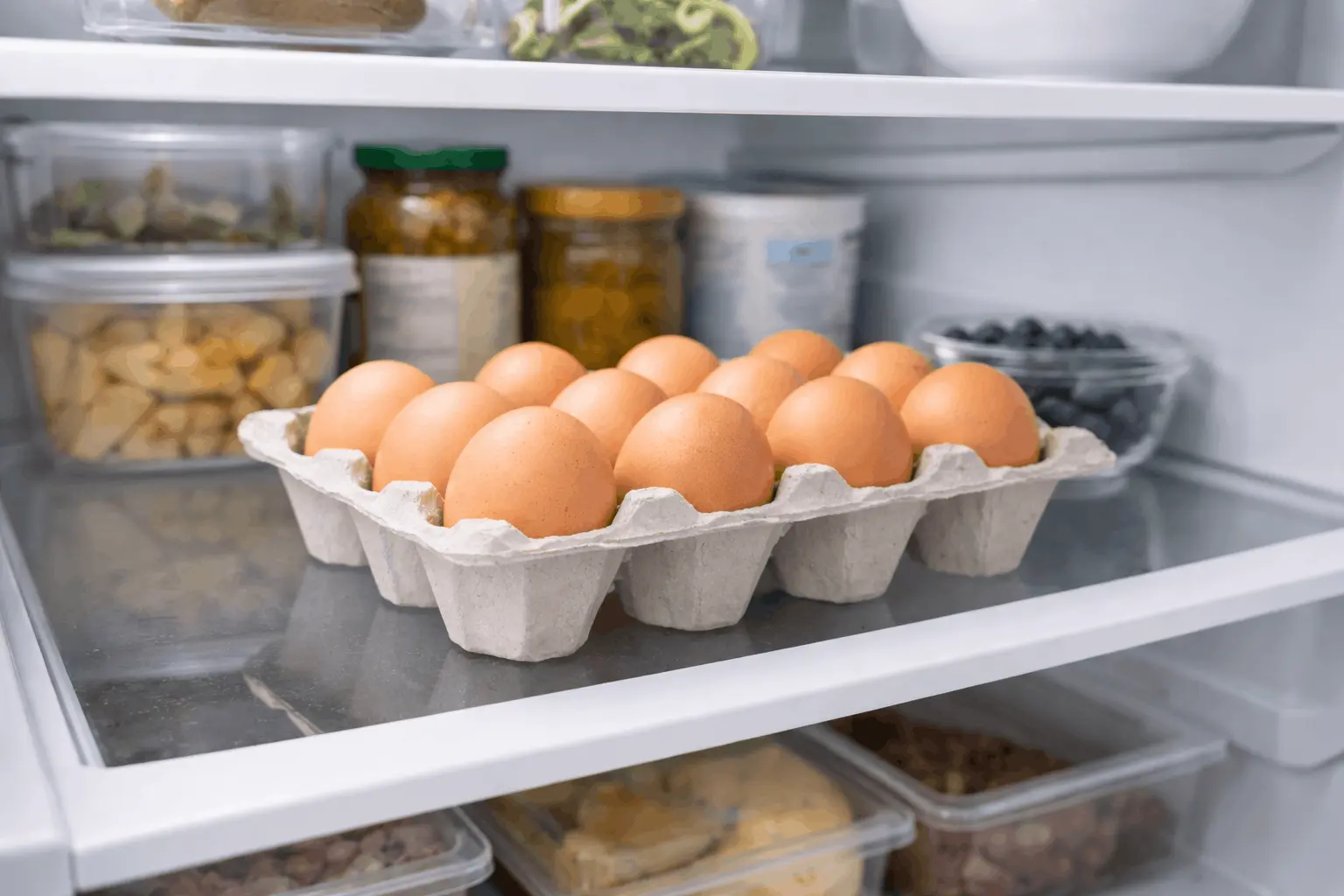
How Long Do Eggs Last in the Fridge?
Eggs are one of the most common foods people keep in their fridge, but they are also one of the most confusing when it comes to freshness and safety. You may notice the date on the carton has passed, or you may not remember when you bought the eggs at all. At that moment, many people hesitate. They do not want to risk getting sick, but they also do not want to throw away food that might still be safe.
This confusion is understandable. Egg cartons show different dates, storage advice can feel inconsistent, and common tests like floating eggs often raise more questions than answers. This guide explains how long eggs last in the fridge, how storage affects their shelf life, and how to make a safe, informed decision about whether eggs should be used or discarded—based on reliable food safety practices, not guesswork.
Egg Storage Takeaways (At a Glance)
- Raw eggs usually last 3–5 weeks in the fridge
- Keep eggs at 40°F (4°C) or colder
- Sell-by dates relate to quality, not safety
- Discard eggs with a bad smell, slime, or mold
- Proper storage helps reduce food waste
Quick Answer: Egg Shelf-Life in the Fridge
Egg shelf life refers to how long eggs remain safe and usable when stored under proper refrigeration.
| Egg type | How long they last in the fridge |
|---|---|
| Raw eggs (in shell) | 3–5 weeks |
| Egg whites (separated) | 2–4 days |
| Egg yolks (separated) | 2–4 days (when covered) |
| Hard-boiled eggs | Up to 1 week |
For full details on cooked eggs, see how long hard-boiled eggs last.
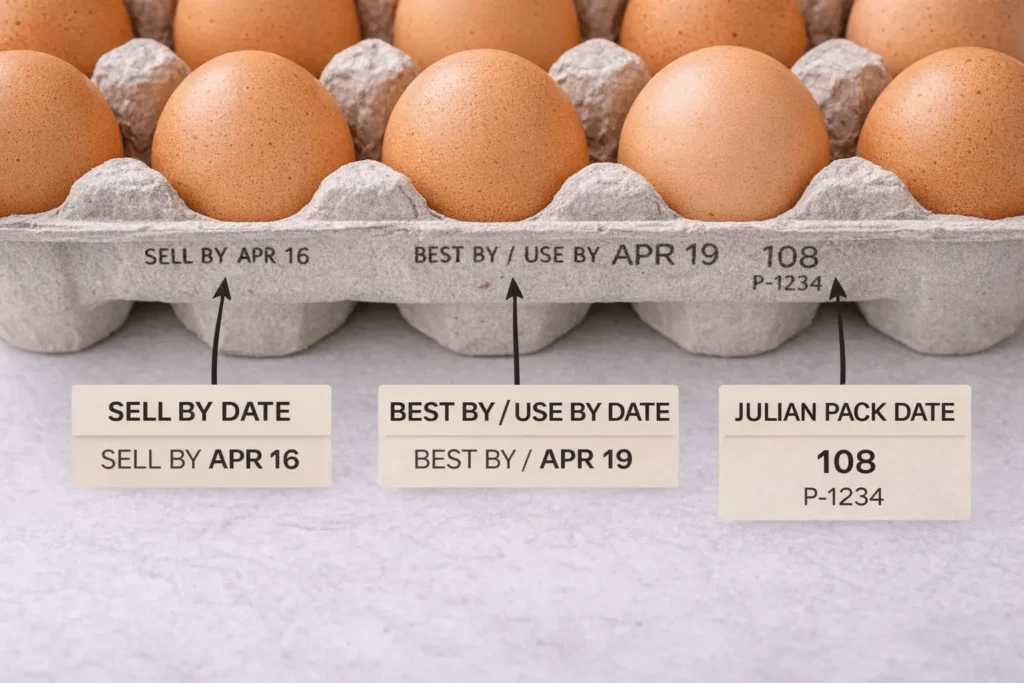
How to Read the Dates on an Egg Carton
Egg carton dates are often misunderstood. They are meant to guide quality, not safety.
Sell-by date
This date tells stores how long to display eggs. Eggs can often be safe 1–2 weeks past this date if kept cold.
Best-by or use-by date
This date suggests peak quality. It does not mean the eggs are spoiled.
Pack date (Julian date)
This shows the day the eggs were washed and packed. When refrigerated, eggs can remain safe 3–5 weeks from this date.
Key point: Storage temperature matters more than the printed date.
Why Eggs Must Be Refrigerated in the U.S.
In the United States, eggs are washed before sale. This removes a natural protective layer called the cuticle, also known as the bloom.
Without this layer:
- Bacteria can enter the shell more easily
- Eggs spoil faster at warm temperatures
Because of this, U.S. eggs must be refrigerated at all times.
The Right Fridge Temperature for Storing Eggs
Eggs last longest at 40°F (4°C) or colder.
If your fridge runs warmer:
- Eggs spoil faster
- Harmful bacteria can grow more easily
A fridge thermometer can help confirm safe storage. The fridge door is often warmer than the main shelves.
How to Store Eggs in the Fridge for Maximum Freshness
Proper storage helps eggs last longer and reduces waste.
Keep eggs in the original carton
The carton:
- Protects eggs from absorbing odors
- Slows moisture loss
- Keeps temperature stable
Avoid the fridge door
The door warms up every time it opens. These temperature changes shorten egg shelf life.
Best place to store eggs
Store eggs:
- On a middle or lower shelf
- Toward the back of the fridge
- Away from strong-smelling foods
If you eat eggs often, you may also find how many eggs you can eat a day helpful.
How Long Do Cooked Eggs Last in the Fridge?
Cooked eggs do not last as long as raw eggs.
In general:
- Hard-boiled eggs last up to 1 week
- Egg dishes spoil sooner
For exact timelines, read how long hard-boiled eggs last in the fridge.
How Long Do Egg Whites and Egg Yolks Last (Separated)?
Once eggs are cracked, they spoil faster.
Egg whites
- Last 2–4 days
- Store in a sealed container
Egg yolks
- Last 2–4 days if covered
- Cover with water or oil to prevent drying
If needed, see how to separate egg whites safely. (coming soon)
How to Tell If Eggs Have Gone Bad
Do not rely on dates alone. Always check the egg.
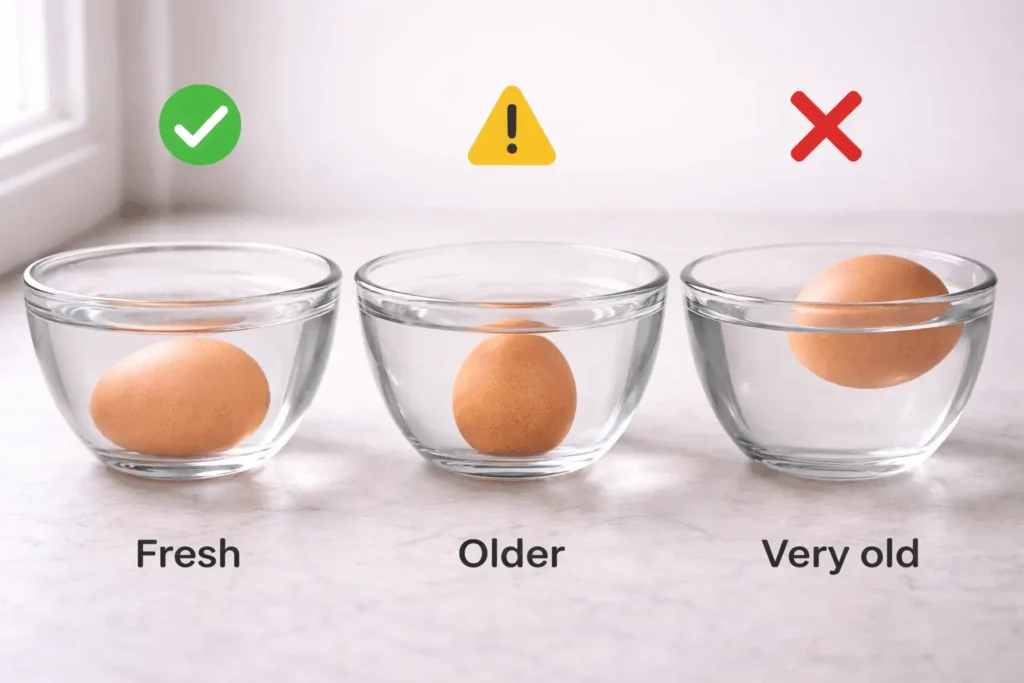
The float test
Place the egg in water:
- Sinks and lies flat = very fresh
- Stands upright = older but often usable
- Floats = throw it away
Floating happens because air slowly builds up inside the egg as it ages. Many people wonder, are floating eggs bad? Which is why smell and appearance still matter.
Why Eggs Float (Simple Explanation)
| Egg age | Air pocket size | Result |
|---|---|---|
| Very fresh | Small | Sinks flat |
| Older | Medium | Stands upright |
| Very old | Large | Floats |
The sniff test
Crack the egg into a bowl.
- A strong sulfur or rotten smell means it is bad
- Fresh eggs have little to no smell
Visual signs
Discard eggs if you see:
- Slime on the shell
- Mold
- Leaking or cracked shells
- Unusual colors with odor
For a clear checklist, see how to tell if eggs are bad.
Use or Toss? Quick Decision Guide
| Situation | What to do |
|---|---|
| Egg smells normal | Safe to use |
| Egg smells bad | Throw it away |
| Egg floats but smells fine | Use with caution; cook fully |
| Egg has slime or mold | Discard immediately |
| Egg left out overnight | Throw it away |
Freshness vs Safety
Freshness and safety are not the same.
Freshness affects:
- Taste
- Texture
- Cooking performance
Safety affects:
- Risk of foodborne illness
An egg can lose freshness but still be safe if refrigerated and cooked fully. Eggs with slime, mold, or a bad smell should always be discarded.
Eggs Left Out at Room Temperature
Eggs should not sit out for long.
General rule:
- Safe for about 2 hours at room temperature
- Only 1 hour if the room is hot
After that, bacteria can grow quickly. When in doubt, throw the egg away.
Farm-Fresh Eggs vs Store-Bought Eggs
Farm eggs are often unwashed, meaning the natural bloom is still present.
Because of this:
- Unwashed farm eggs may last longer
- Once washed, they behave like store-bought eggs
In the U.S., refrigeration is still the safest option. If farm eggs are washed, refrigerate them immediately.
Can You Freeze Eggs to Make Them Last Longer?
Yes, but never freeze eggs in the shell.
You can freeze:
- Egg whites
- Egg yolks (with a little salt or sugar)
- Whole beaten eggs
Frozen eggs last up to 1 year. Label containers with the date. They work best for baking and cooking.
What to Do With Eggs That Aren’t Very Fresh
Older eggs do not always need to be thrown away.
Good uses include:
- Hard-boiling (older eggs peel more easily—see how to peel hard-boiled eggs)
- Baking
- Scrambles and omelets
Avoid using older eggs raw or lightly cooked.
Egg Safety Checklist
- Keep eggs refrigerated
- Store eggs in the original carton
- Avoid storing eggs in the fridge door
- Check smell and appearance before use
- Discard cracked eggs
- When unsure, throw it out
For broader egg health context, you may also want to read “Are Eggs Good for You?“
FAQs About Egg Storage
Can you eat eggs past the sell-by date?
Often yes, if stored properly and they pass smell and visual checks.
How long can eggs stay out of the fridge?
About 2 hours, or 1 hour in hot conditions.
Are floating eggs always bad?
Not always. Floating means the egg is old. Smell and appearance matter more.
Do farm eggs last longer?
Only if they are unwashed. Once washed, refrigerate them like store eggs.
Can you freeze eggs?
Yes, but remove them from the shell first.
Bottom Line
Eggs can remain safe to use longer than many people expect when stored correctly. When kept at 40°F (4°C) or colder, raw eggs in their shells can usually last 3–5 weeks, even if the date on the carton has passed. Understanding the difference between freshness and safety helps reduce unnecessary food waste while still protecting your health. This guidance reflects widely accepted food safety practices and supports informed, practical decisions in your kitchen.

