
Can You Eat Raw Eggs? Safety, Risks, and What to Know
Eggs are common in many kitchens, but raw eggs often raise questions and concern. You may have seen raw eggs added to smoothies, protein shakes, or recipes online. You may have also heard mixed advice, some people say raw eggs are dangerous, while others say they eat them all the time without problems. This conflicting information can make it hard to know what is actually safe.
If you are searching this after accidentally eating a raw egg, thinking about using one in a recipe, or simply trying to understand the real risks, you are not alone. Food safety topics can feel stressful, especially when health is involved. This guide explains what food safety experts say about eating raw eggs, the real risks involved, and safer options—using clear, evidence-based information you can trust.
Quick Takeaway: Can You Eat Raw Eggs?
- Raw eggs can carry salmonella
- Food safety experts do not recommend eating eggs raw
- Cooked eggs offer similar nutrition with much lower risk
- Pasteurized eggs are safer for raw or lightly cooked recipes
- High-risk groups should avoid raw eggs completely
Can You Eat Raw Eggs? (Quick, Clear Answer)
Yes, you can eat raw eggs.
However, food safety experts do not recommend it.
Raw eggs can sometimes carry harmful bacteria, including salmonella. While the chance of any single egg being contaminated is low, the risk is real and avoidable. For most people, eating raw eggs does not provide clear benefits compared to cooked eggs.
If you want a broader nutrition overview, you can also read are eggs good for you.
Why Eating Raw Eggs Can Be Risky
The main concern with raw eggs is salmonella.
Salmonella is a type of bacteria that can cause foodborne illness. It can be present inside the egg or on the shell. You cannot see it, smell it, or taste it. Even eggs that look clean and fresh can contain bacteria.
If a raw or undercooked egg contains salmonella, it can lead to food poisoning.
What Happens If You Eat Raw Eggs
If a raw egg contains salmonella, symptoms may appear within several hours to a few days.
Common symptoms include:
- Diarrhea
- Stomach cramps
- Nausea
- Vomiting
- Fever
Many healthy adults recover without treatment. Symptoms can be more serious for people in higher-risk groups.
How Likely Is Salmonella From Raw Eggs, Really?
The risk of salmonella from raw eggs is low, but not zero.
Most eggs do not cause illness. However, food safety agencies still advise against eating eggs raw because a single contaminated egg can be enough to cause infection.
Risk tends to increase when:
- Raw eggs are eaten frequently
- Eggs are stored or handled improperly
- High-risk individuals consume them
Low risk does not mean no risk.
Raw Eggs vs Cooked Eggs: Nutrition and Protein Absorption
Raw eggs and cooked eggs contain similar nutrients.
The main difference is how your body absorbs and uses them.
Protein absorption
Your body absorbs protein more efficiently from cooked eggs than from raw eggs.
Raw egg whites contain a protein called avidin. Avidin can bind to biotin, a B vitamin, and reduce its absorption if raw eggs are eaten often. Cooking eggs inactivates avidin and improves digestion.
If you want detailed nutrition values, see egg nutrition facts (1 egg).
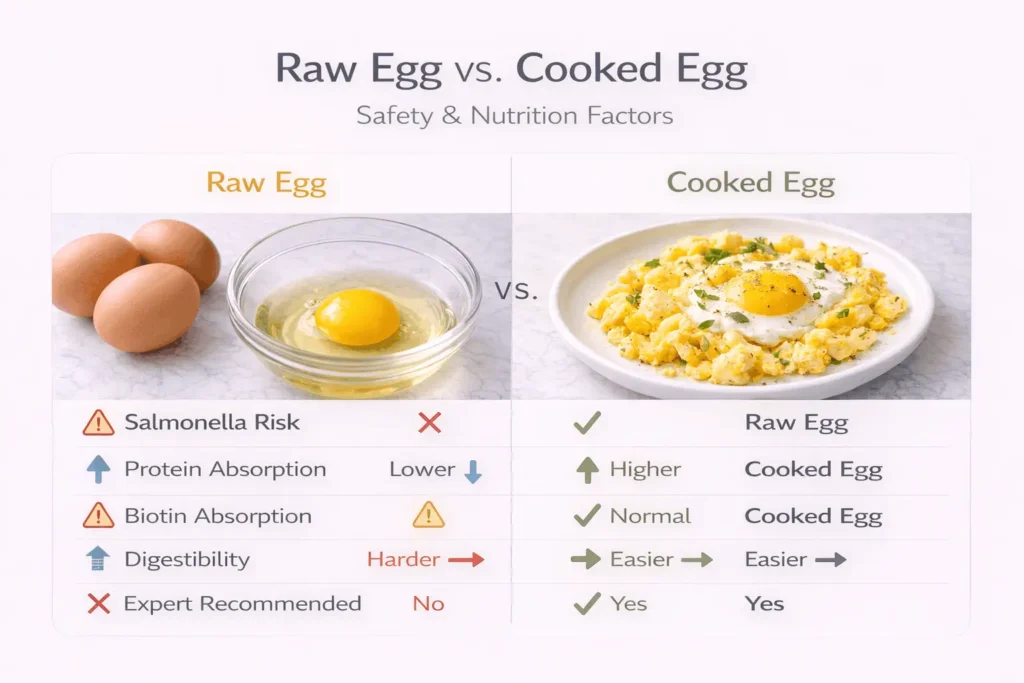
Raw vs Cooked Eggs: Quick Comparison
| Factor | Raw Eggs | Cooked Eggs |
|---|---|---|
| Salmonella risk | Possible | Much lower when cooked properly |
| Protein absorption | Lower | Higher |
| Biotin absorption | Can be reduced | Normal |
| Digestibility | Harder for some | Easier |
| Recommended by experts | No | Yes |
Are Raw Eggs More Nutritious Than Cooked Eggs?
There is no strong evidence that raw eggs are more nutritious.
Cooking eggs may slightly change some nutrients, but it does not remove their overall nutritional value. In many cases, cooked eggs provide nutrients in a form the body can absorb more easily.
This is also explained in egg yolk vs egg white nutrition.
What Is Pasteurization and Why It Matter?
Pasteurization is a controlled heat process.
It reduces harmful bacteria without fully cooking the egg.
If a recipe uses raw or lightly cooked eggs, pasteurized eggs are the safer option.
They are commonly sold as:
- Liquid egg products
- Pasteurized egg whites
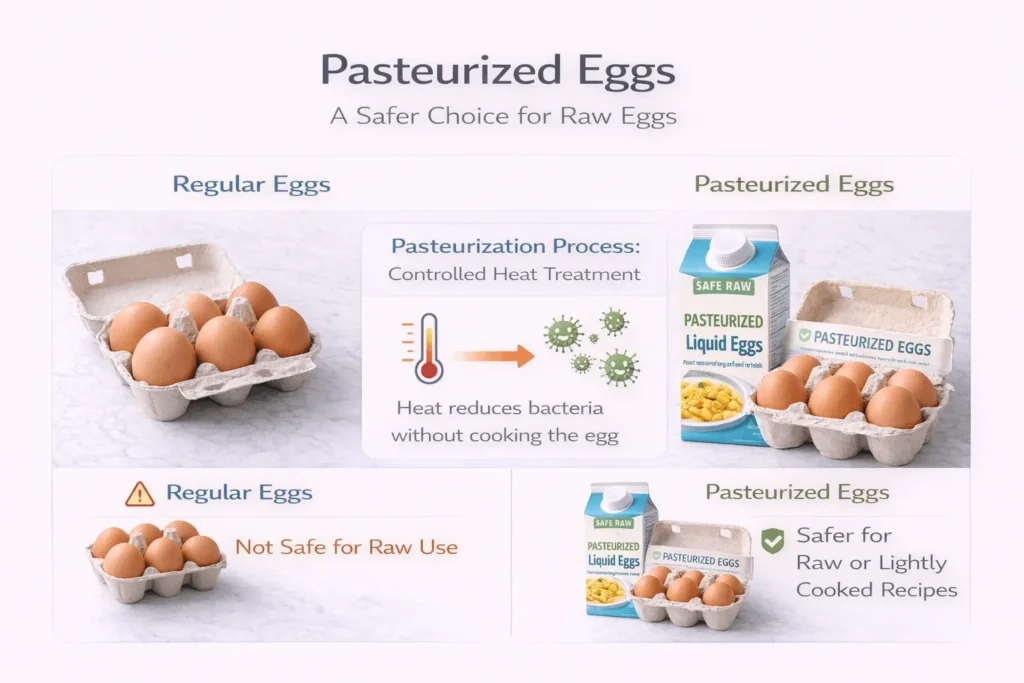
Pasteurized shell eggs are available in some grocery stores, but they are less common in the United States.
Learn more in pasteurized eggs explained.
Who Should Never Eat Raw Eggs
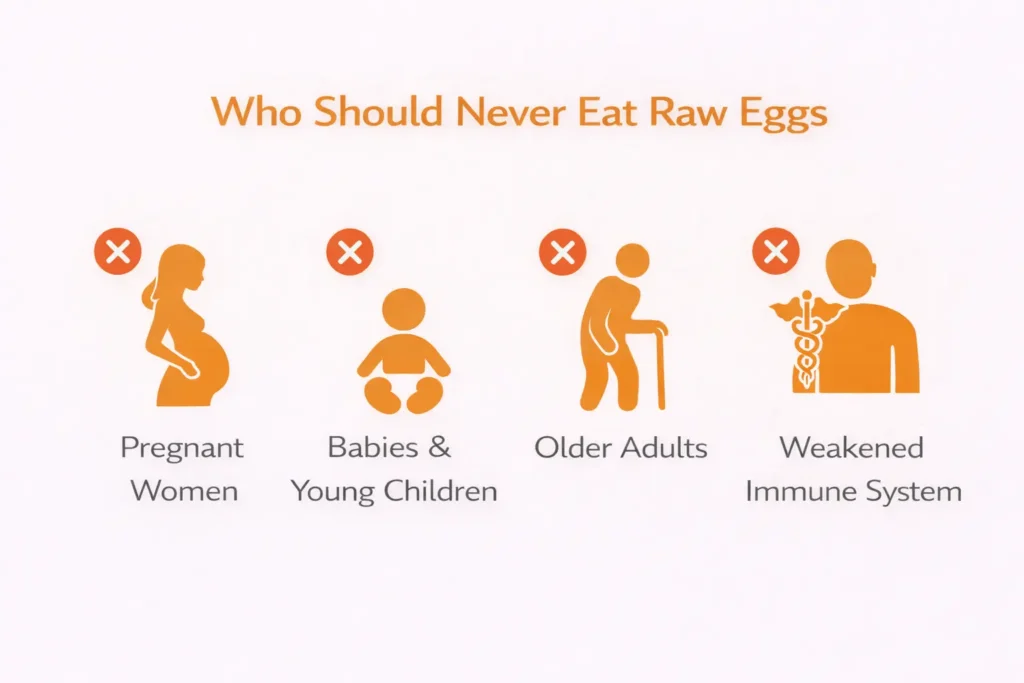
Some people should always avoid raw eggs because foodborne illness can be more severe.
| Group | Raw Eggs Recommended? |
|---|---|
| Pregnant women | ❌ No |
| Babies and young children | ❌ No |
| Older adults | ❌ No |
| People with weakened immune systems | ❌ No |
| Healthy adults | ⚠️ Not recommended |
Related reading: eggs during pregnancy: safety and nutrition.
Can You Eat Raw Eggs Every Day?
Eating raw eggs regularly is not recommended.
Frequent raw egg consumption increases exposure to bacteria over time. It may also interfere with biotin absorption if large amounts are eaten often.
If eggs are part of your daily diet, cooked eggs are the safer choice. We cover this topic in can you eat eggs every day.
Raw Eggs in Smoothies, Shakes, and Recipes
Raw eggs are sometimes used in:
- Smoothies and protein shakes
- Homemade sauces
- Desserts like tiramisu
- Raw batter or dough
Using regular raw eggs in these recipes increases food safety risk.
Safer options include:
- Pasteurized eggs
- Commercial egg products designed for raw use
For simple, safe preparation, you may prefer how to boil eggs.
What If You Already Ate a Raw Egg?
If you accidentally ate a raw egg, there is usually no need to panic.
Most people do not get sick. Watch for symptoms over the next few days. If you develop a fever, severe diarrhea, or vomiting, especially if you are in a high-risk group, contact a healthcare professional.
Digestive Effects: Do Raw Eggs Digest Differently?
Yes. Raw eggs can be harder to digest for some people.
Raw egg protein is less digestible. Some people report:
- Bloating
- Nausea
- Stomach discomfort
Cooked eggs are usually easier on digestion.
Are Store-Bought Eggs Safer to Eat Raw Than Farm Eggs?
Not necessarily.
Store-bought eggs in the U.S. are usually washed before sale. Washing removes dirt but does not guarantee the egg is safe to eat raw, because bacteria can still be inside the egg.
Farm eggs may appear fresher, but fresh does not automatically mean safer. The safest option for raw use remains pasteurized egg products.
Why Some Countries Eat Raw Eggs (And Why That’s Different)
In some countries, such as Japan, eating raw eggs is more common.
This is due to differences in farming practices, handling standards, and supply chains. These systems are different from those used for most eggs sold in the United States.
How to Reduce Risk If You Choose Raw Eggs
If you choose to eat raw eggs despite the risks:
- Use pasteurized eggs only
- Keep eggs refrigerated
- Avoid cracked shells
- Wash hands and utensils
These steps reduce risk but do not eliminate it completely.
For best safety, cooking eggs until whites and yolks are firm is recommended.
Common Myths About Raw Eggs
- “Organic eggs are safe to eat raw.” Not necessarily.
- “Alcohol or hot sauce kills salmonella.” This is not reliable.
- “Raw eggs build more muscle.” There is no strong evidence, and cooked eggs are usually better absorbed.
FAQs About Eating Raw Eggs
Can raw eggs make you sick?
Yes, if they contain harmful bacteria.
Are raw eggs better for muscle building?
No clear evidence supports this.
Is raw egg safe in cookie dough?
Only when pasteurized eggs are used.
Do cooked eggs lose nutrients?
Cooking may slightly change some nutrients, but overall nutrition remains strong.
Conclusion
Raw eggs are not recommended by food safety experts. While the chance of illness may be low, the risk is real and cannot be identified by sight or smell. Raw eggs also do not offer proven nutritional advantages over cooked eggs, and cooking improves safety while keeping eggs nutritious.
For most people, cooked eggs are the safest and most reliable choice. If a recipe requires raw or lightly cooked eggs, pasteurized egg products are the safer alternative. Pregnant women, young children, older adults, and anyone with a weakened immune system should avoid raw eggs completely. Making informed choices helps reduce unnecessary risk while still allowing eggs to remain a healthy part of everyday meals.


