
Egg Diet: What It Is, How It Works, and Is It Safe?
Trying to lose weight quickly can feel frustrating. You may see people online talking about the egg diet as a simple way to drop weight fast. At the same time, it is normal to worry about safety, health risks, and whether this diet actually works or just leads to weight regain later.
The egg diet sounds appealing because it is simple and structured. Still, many people feel confused about what the diet really involves and what results to expect. This article explains what the egg diet is, how it works, and what you should realistically know before trying it.
Important: This article is for informational purposes only and does not replace professional medical advice.
Egg Diet: Quick Takeaway
- The egg diet is a short-term, restrictive eating plan
- Early weight loss is often water weight, not fat
- High protein may help reduce appetite for some people
- The diet is not suitable for long-term use
- Some people should avoid it completely
- Balanced diets are usually safer and more sustainable
What Is the Egg Diet?
The egg diet is a short-term eating plan where eggs are the main source of protein in most meals. It usually limits carbohydrates and reduces food variety. The main goal is to lower calorie intake while helping some people feel full.
This diet is not designed as a permanent way of eating. It is a structured plan meant for temporary use only.
Egg Diet vs Eating Eggs Normally
Eating eggs as part of a balanced diet allows flexibility and variety. The egg diet is different because it limits many foods and focuses on restriction rather than balance.
If you want to understand how eggs fit into weight loss outside strict diet plans, read our guide on Are Eggs Good for Weight Loss. This article focuses only on the egg diet as a structured approach.
Types of Egg Diets You’ll See Online
There is no single version of the egg diet. Several variations are commonly shared.
Boiled Egg Diet
This version focuses on boiled eggs with limited vegetables and lean protein. Most carbohydrates are avoided.
Egg Fast
The egg fast is very restrictive and usually lasts three to five days. It includes eggs and fats, with very few other foods.
Steak and Eggs Diet
This variation combines eggs with red meat. It is extremely low in carbohydrates and high in protein and fat.
7-Day and 14-Day Egg Diet Plans
Some plans outline full-week or two-week schedules. These plans often repeat the same meals and limit food variety even more.
How the Egg Diet Works
The egg diet works mainly through restriction.
Calorie Restriction and Food Limitation
By limiting food choices, many people naturally eat fewer calories. This can lead to short-term weight loss.
High Protein and Satiety
Eggs are high in protein. Protein may help increase fullness and reduce hunger for some people.
Low-Carb Effects
Most egg diet plans are low in carbohydrates. This can cause quick changes on the scale, especially in the first few days.
Glycogen Loss vs Fat Loss
Early weight loss is often water weight. When carbohydrate intake drops, the body releases stored glycogen and water. Fat loss only happens if a calorie deficit continues over time.
Foods You Can Eat on the Egg Diet
Commonly allowed foods include:
- Eggs
- Lean meats or fish
- Non-starchy vegetables
- Limited fats
- Water, tea, and black coffee
Foods to Avoid on the Egg Diet
Most versions restrict:
- Bread, rice, and pasta
- Sugar and sweets
- Processed foods
- Sugary drinks
- High-calorie snacks
Sample Egg Diet Meal Plan (Informational Only)
This example is for understanding only, not a recommendation.
3-Day Example
- Breakfast: Eggs
- Lunch: Eggs and vegetables
- Dinner: Eggs with lean protein
7-Day Example
Meals repeat with small changes in vegetables and protein. Many people find this repetition difficult to maintain.
Potential Benefits of the Egg Diet
Some people notice short-term effects:
- Simple structure
- Reduced appetite for some individuals
- Quick initial weight change
These effects are usually temporary.
What Weight Loss on the Egg Diet Is and Is Not
Weight loss often happens quickly at first. Much of this is water weight rather than body fat.
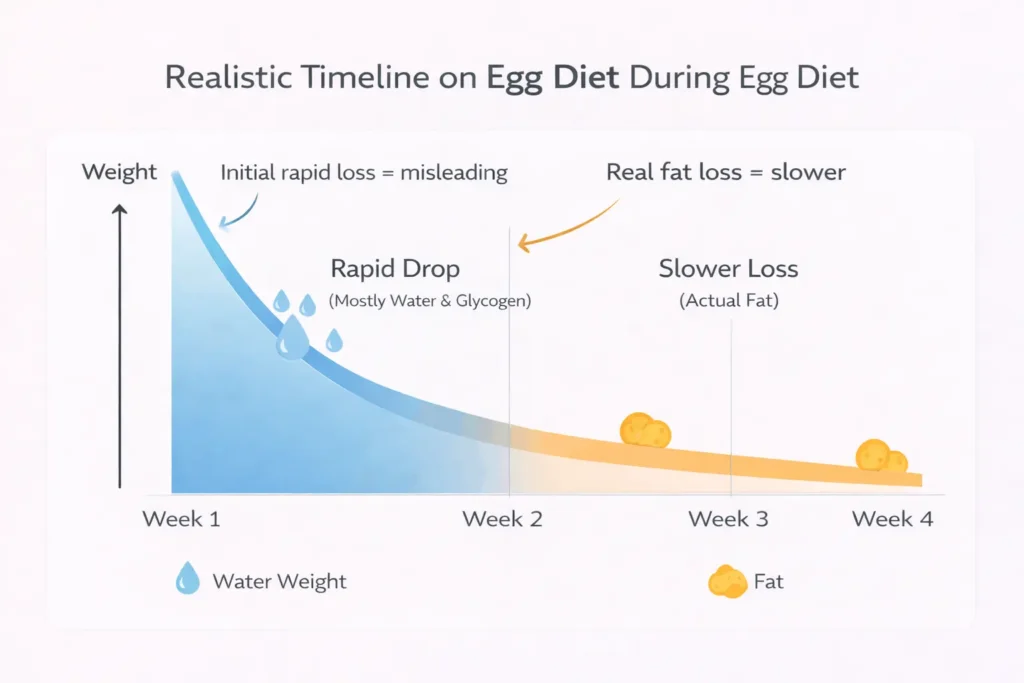
The egg diet does not target belly fat. It does not reset metabolism. Results vary from person to person.
Is the Egg Diet Backed by Science or Mostly Anecdotal?
There is limited research on the egg diet itself. Most claims come from personal experiences rather than long-term studies.
While high-protein diets can support fullness, experts generally caution against very restrictive eating patterns. Evidence for long-term success is limited.
Risks and Side Effects of the Egg Diet
Nutrient and Fiber Deficiencies
Reducing food variety can lower fiber and essential nutrients.
Digestive Issues and Fatigue
Some people experience constipation, headaches, or low energy.
Cholesterol and Heart Health Context
Eggs contain dietary cholesterol, but health effects depend on the overall diet. For a deeper explanation, see Are Eggs High in Cholesterol?
Who Should Avoid the Egg Diet
| Group | Reason |
|---|---|
| Pregnant or breastfeeding | Higher nutrient needs |
| Kidney conditions | High protein load |
| Gout or uric acid issues | Potential flare risk |
| Eating disorder history | Restrictive pattern |
| Vegans | Eggs are not consumed |
Who Might Consider the Egg Diet and Who Shouldn’t
Some people try the egg diet for short-term structure or simplicity. Others may find it too restrictive or stressful.
This diet is also not suitable for people following vegan diets, who avoid eggs for ethical or dietary reasons.
How Long Is Too Long on the Egg Diet?
Most experts discourage following the egg diet for extended periods. Longer use increases health risks and raises the chance of weight regain.
Common Mistakes People Make on the Egg Diet
- Staying on the diet too long
- Ignoring vegetables and fiber
- Adding excessive fats
- Treating it as a permanent solution
Signs the Egg Diet Is Not Working for You
- Ongoing fatigue
- Digestive discomfort
- Dizziness
- Obsessive thoughts about food
These are signs to stop and reassess.
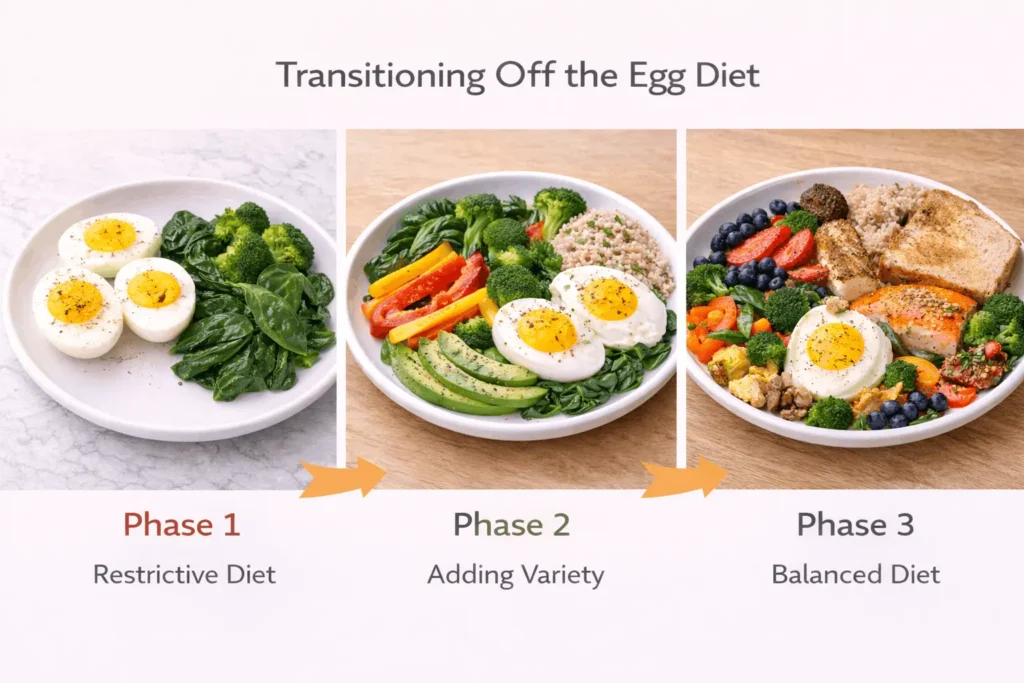
How to Transition Off the Egg Diet Safely
Why Transitioning Matters
Sudden changes can lead to rebound weight gain.
Foods to Reintroduce First
Gradually add vegetables, whole grains, and fiber-rich foods.
Reducing Rebound Weight Gain
Slow changes support better long-term habits.
Egg Diet vs Balanced High-Protein Diet
| Feature | Egg Diet | Balanced High-Protein Diet |
|---|---|---|
| Duration | Short-term only | Long-term |
| Food variety | Very limited | Wide |
| Weight loss | Fast at first | Slower, steadier |
| Sustainability | Low | High |
| Nutrient balance | Limited | More complete |
| Expert support | Mixed | Generally supported |
These comparisons are general, and individual results may vary.
Healthier Alternatives to the Egg Diet
Compared to very restrictive plans like the egg diet, balanced high-protein diets are usually easier to maintain and more nutritionally complete.
Frequently Asked Questions About the Egg Diet
How many eggs per day on the egg diet?
This depends on the plan and is often higher than general daily guidance.
Can you do the egg diet for two weeks?
Some plans suggest this, but longer duration increases risks.
Will weight come back after stopping?
Weight regain is common if long-term habits do not change.
Bottom Line: Should You Try the Egg Diet?
The egg diet is a short-term, restrictive eating plan. Some people see quick changes on the scale, mainly due to reduced calories and water loss. However, it is not designed for long-term use and may not be suitable for everyone.
Most experts view the egg diet as a temporary tool rather than a lasting solution. For long-term health and weight management, balanced and sustainable approaches are usually more effective.


